





Anti-submarine warfare for the Royal Navy: Balaena and Kongsberg Maritime plan Arctic Hunter for Type 92
Anti-submarine warfare in the North Atlantic and the Arctic with unmanned platforms: Balaena and Kongsberg Maritime intend to jointly develop and possibly build the Arctic Hunter for the Royal Navy's Type 92 programme. A procurement decision is still pending.
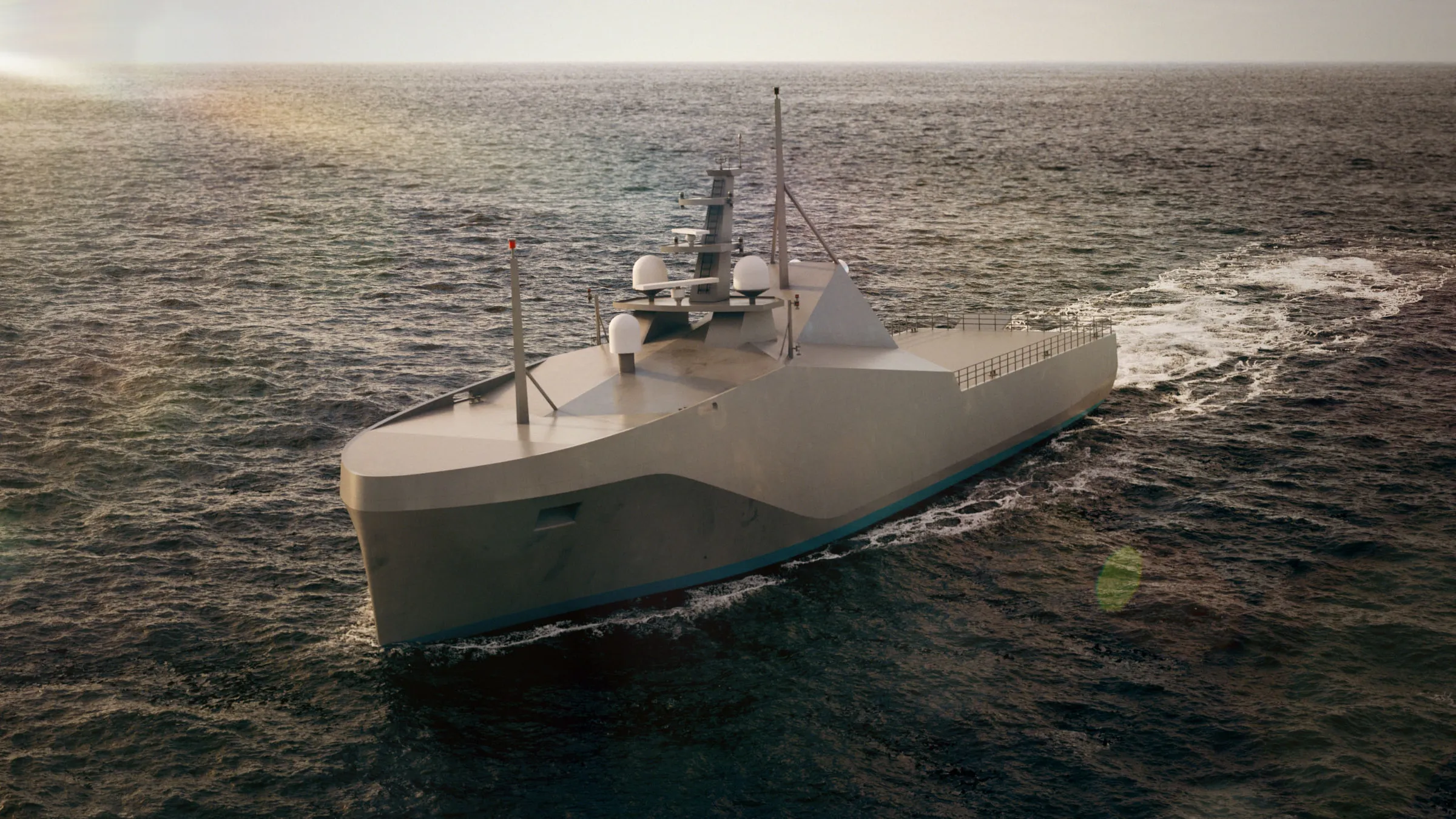
For anti-submarine warfare in the North Atlantic and the Arctic, the British shipyard group Balaena and Kongsberg Maritime are putting forward the unmanned surface vessel Arctic Hunter. The two companies have signed a memorandum of understanding that provides for joint development and possible production. The platform is intended as a solution for the Royal Navy's future Type 92 programme.
The agreement was signed in Norway, at Kongsberg Maritime's headquarters. It continues an existing cooperation. At its core is the Arctic Hunter Uncrewed Surface Vessel, an unmanned surface vessel (USV) that brings together proven concepts from civil shipbuilding and modern autonomous technologies.
The USV is to be deployable even in extreme Arctic conditions and to provide persistent monitoring of potential underwater threats. The tasks are divided: Kongsberg Maritime supplies the ship design as well as the remote control and autonomy technology, while Thales UK is to contribute specialised sonar systems and military communications technologies.
Construction planned in Birkenhead
If the project goes ahead, the vessels are to be built at Balaena's shipyard in Birkenhead. The aim is to deliver the first units before the end of the decade so that military systems can then be integrated.
The site has four large dry docks and a basin that can be used independently of the tides, along with extensive manufacturing facilities and a dedicated hall for modular shipbuilding.
According to the company, more than 2,000 people work for Balaena, which operates a network of shipyard sites in the United Kingdom and Gibraltar. Building on this infrastructure, the new vessels are expected to be constructed comparatively quickly, using proven commercial production methods.
“Arctic Hunter offers an exciting opportunity to combine Kongsberg's world-leading maritime technology and shipbuilding expertise with Balaena's established British shipbuilding capacity,” says Simon Gillett, CEO of Balaena.
Anti-submarine warfare as part of the “Hybrid Fleet”
Through the Type 92 programme, the Royal Navy wants to expand its anti-submarine capabilities with unmanned platforms. Under the “Hybrid Fleet” concept, crewed warships and autonomous units are to work together more closely in future.
Such systems could play an important role in the North Atlantic and the northern sea areas in particular. There, unmanned surface vessels are to remain on operations for extended periods and use their sensors to help detect and track submarines.
Only recently, Thales UK and Kongsberg Maritime announced a cooperation: together they intend to develop an integrated anti-submarine solution based on the Arctic Hunter. This partnership complements the new agreement, with Balaena now joining as a potential British production partner.
The project is also intended to strengthen industrial cooperation between the United Kingdom and Norway and to open up additional orders for the British shipbuilding industry.
However, the Royal Navy has not yet made a final procurement decision. The companies also gave no details of planned numbers, dimensions or costs of the Arctic Hunter platform.
Photo credits
© Elaborate Communications
Continue exploring

Sea drones from Ukraine hit corvette “Merkuri” in Benghazi and freighter “Ascalon” off Libya

Drone strikes on Russia hit oil and missile industry in Magyar's autumn offensive

Fixed-wing drones and satellites: TRL Defense on networked reconnaissance

Alabuga drone hub takes in workers placed by Ghana and DR Congo for Russia's attack drones
