





Arms imports: European states buy 47 per cent more military equipment, according to SIPRI
While the global arms trade is shrinking according to SIPRI, arms imports in Europe are rising sharply. US companies are the main beneficiaries, but German manufacturers such as Rheinmetall are also expanding production.
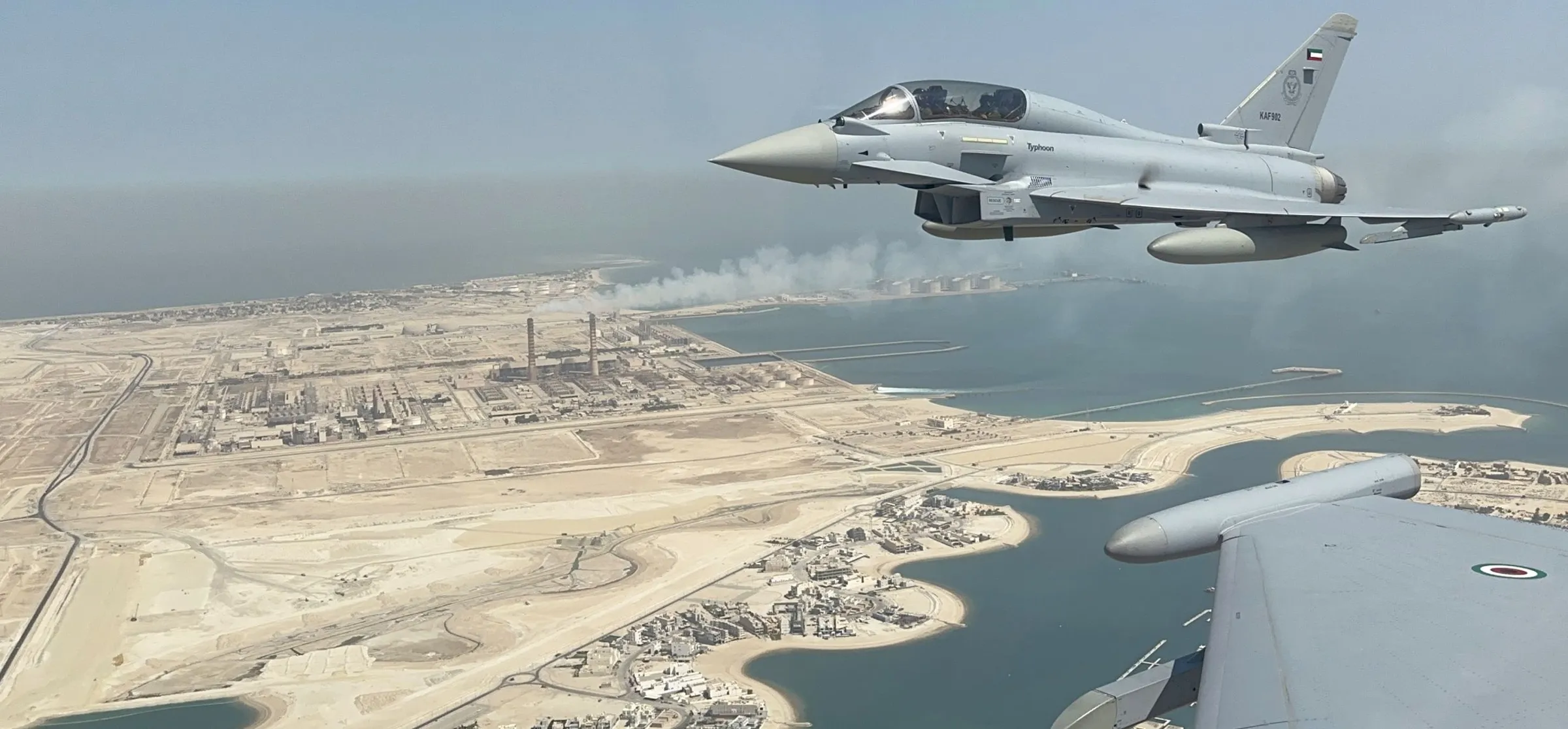
European countries are procuring a growing share of the weapons that shape the international arms business. This is the finding of a recent report by the Stockholm International Peace Research Institute (SIPRI), which documents rising arms imports in Europe. The market is dominated by combat aircraft, main battle tanks, artillery and drones.
Worldwide, according to the latest SIPRI report, transfers of military equipment in the period 2018 to 2022 fell by 5.1 per cent compared with 2013 to 2017. In Europe, by contrast, imports grew over these five years, and the increase was particularly marked in the last reporting year, 2022, as a result of the war in Ukraine.
In total, European states imported 47 per cent more weapons during the reporting period than in the comparison years 2013 to 2017. For the European NATO countries alone, the increase was as high as 65 per cent. There is no end to this trend in sight: since Russia’s full-scale invasion of Ukraine, Europe’s NATO states have significantly stepped up their defence efforts.


At the same time, deliveries of weapons and ammunition to Ukraine are emptying Western arsenals, in Europe as well as in the USA. On both sides of the Atlantic, stocks are now being replenished and rebuilt to meet national needs. The military aid also leaves its mark on the SIPRI report. Across the entire period 2018 to 2022, Ukraine is the 14th-largest arms importer. Taking only 2022, the year in which Russia invaded the Eastern European country, it even moves up to third place in the ranking of the largest importers.

German manufacturers among the winners
The higher investment in Europe benefited primarily American arms manufacturers, but also European companies, including German ones. With a global market share of 4.2 per cent, Germany ranked fifth among the largest arms suppliers between 2018 and 2022. Up to the start of the war in Ukraine, however, German exports had fallen by 35 per cent compared with the previous five years.
The trend is now pointing the other way. Rheinmetall, for example, is building a new ammunition factory in Lower Saxony to meet the increased demand. By the summer, around 300,000 rounds are to be produced there for the outdated Gepard anti-aircraft tank, which Germany has supplied to Ukraine. This became necessary because neutral Switzerland could not bring itself to approve ammunition exports by its company Oerlikon (including to third parties). In Saxony, meanwhile, a propellant plant costing up to 800 million euros is under consideration.
Rheinmetall also wants to build in Ukraine: a greenfield factory is planned there for the state-of-the-art Panther main battle tank. 400 Panthers a year are to roll off the line, protected by the company’s own Mantis air defence system. Since the start of the war, the share price of the Düsseldorf arms maker has more than doubled, and at the end of February the group even rose into Germany’s leading stock index, the DAX.
War materiel for use in Ukraine is also produced by the Munich company Krauss-Maffei Wegmann (KMW), for example the Leopard 2 main battle tank, much discussed in connection with Ukraine, or the Panzerhaubitze 2000 self-propelled howitzer. In February, Munich said it could ramp up production but was (still) waiting for orders.
Italy, Austria’s neighbour and supplier of the 36 Leonardo helicopters recently ordered by the Austrian Armed Forces (Bundesheer), possibly also of jet trainers in future, ranks sixth worldwide with 3.8 per cent. For imports in the Middle East, the country takes fourth place: 67 per cent of Italian exports go to this region, and from 2018 to 2022 that was 45 per cent more than in the period up to 2017.


USA as largest supplier, F-35 as driving force
The USA draws the greatest advantage from Europe’s rearmament. As beneficiaries of the “new Cold War”, the Americans have further expanded their position as the largest arms exporter, and Washington also remains the largest arms supplier worldwide. From 2018 to 2022, 23 per cent of all US arms exports went to European countries, eleven per cent more than before. Among the European NATO states, the United Kingdom, the Netherlands and Norway in particular sourced weapons from the USA.
Deliveries to NATO allies are mostly expensive high-tech weapons, such as the F-35 stealth fighter-bomber, which the USA developed together with other partners. Besides the USA, the United Kingdom, the Netherlands, Norway and Italy, among others, operate the modern jet. Poland has ordered 32, and Germany is procuring 35 aircraft. Last year, shares in Lockheed Martin, the US defence group behind the F-35 (among other things), rose by 37 per cent. Shares in the US group Raytheon Technologies, with its various rockets and missiles, gained almost 17 per cent. Most recently, both companies also received orders for guided weapons destined for Ukraine and for the depleted US arsenals.
Arms imports worldwide: the main customers of the USA
The largest customer was Saudi Arabia with 19 per cent of all US arms exports, followed by Japan (8.6 per cent), Australia (8.4 per cent) and South Korea (6.5 per cent). Deliveries of US military equipment to NATO partner Turkey, on the other hand, collapsed dramatically because of bilateral tensions. Among the largest recipients of US weapons, Turkey fell from 7th to 27th place, probably because it was excluded from the F-35 over its purchase of Russian air defence. Between 2018 and 2022, a total of 23 per cent of US arms exports went to states in Europe; in the four years before, the figure had been eleven per cent.
Europe rearmed, but worldwide the volume of arms transfers from 2018 to 2022 shrank by 5.1 per cent compared with 2013 to 2017. Arms imports declined in Africa (minus 40 per cent), the Americas (minus 21 per cent), Asia (minus 7.5 per cent) and the Middle East (minus 8.8 per cent). East Asia, by contrast, imported more weapons because of geopolitical tensions with China and North Korea. Traditional alliances there became firmer: China, unsurprisingly, accounted for 77 per cent of Pakistan’s imports. The largest increases were recorded by US allies South Korea (plus 61 per cent) and Japan (+171 per cent), naturally with the USA as the main supplier.

The US share of global arms exports grew from 33 to 40 per cent in the period under review, 2018 to 2022. Russia, the second-largest arms exporter, by contrast accounted for only 16 instead of 22 per cent of global exports. The reason: Russia is giving priority to supplying its own armed forces. In addition, the reputation of Russian military technology has probably suffered visibly in view of the results in Ukraine. Because of the sanctions against Russia and pressure from the USA and its allies, demand from other states for Russian weapons is likely to remain low, the report says.


France in third place, India leads imports
France ranks third among the largest exporters of military equipment. It increased its share of global arms exports from 7.1 to 11 per cent in the years 2018 to 2022 compared with the previous five years, for example with an order for 80 Rafale jets for the Emirates. French arms exports grew by 44 per cent, almost a third of which went to India, mainly in the form of 36 Rafale jets. Nevertheless, Delhi remains the largest recipient of Russian weapons and, currently at 13 per cent, also the largest arms importer in the world, even though the volume of Russian exports to Delhi shrank by 37 per cent.
Russia did, however, export more weapons to China (plus 39 per cent, for example Su-35S) and Egypt (plus 44 per cent, for example MiG-29M and Ka-52), and both countries thus rose to become its second- and third-largest recipients. In second place among the world’s largest arms importers are Saudi Arabia and the small emirate of Qatar. Qatar recently increased its arms imports by 311 per cent (!) through three parallel aircraft procurements. Australia and China rank fourth and fifth for arms imports.
Africa sources most of its weapons from Russia
For Africa, Russia is the most important arms supplier: from 2018 to 2022, 40 per cent of African arms imports came from Russia. Far behind follow the USA (16 per cent), China (9.8 per cent) and France (7.6 per cent). South of the Sahara, according to the report, several arms-exporting countries are competing for influence. In the period 2018 to 2022, Russia overtook China there in arms deliveries and became the largest supplier to the sub-Saharan region: 21 per cent of the weapons for these states came from Russia, 18 per cent from China and 8.3 per cent from France. Overall, the states of sub-Saharan Africa imported 23 per cent fewer weapons; the largest recipients were Angola, Nigeria and Mali.
Since the end of the USSR, combat aircraft and combat helicopters have “traditionally” made up the largest “single item” in Russia’s arms export business, at around 40 per cent. From 1992 to 2022, 328 of them (mostly Flanker derivatives) were sold worldwide. At the end of 2022, however, only 84 in total remained on Russia’s order books.
Special fund: 100 billion euros for the Bundeswehr
After Russia’s invasion of Ukraine, Chancellor Olaf Scholz had pledged 100 billion euros to the Bundeswehr (German Armed Forces). According to the Ministry of Defence, none of it was spent in the whole of 2022, but around a third has been earmarked: for transport helicopters, digitalisation and the F-35 jets mentioned above. According to experts, however, after one year only 50 to 70 billion euros of the 100 billion euros are still intended for or available for military equipment. The reasons are the interest on the borrowed special fund, higher prices and value added tax.
As a general rule for such financial volumes, arms contracts are often “non-transparent” because of military secrecy and for competitive reasons. The SIPRI researchers around Pieter and Simeon Wezeman therefore often find it difficult to calculate the total value of the weapons traded. By their estimate, the global arms trade amounts to around 93.8 billion euros a year. According to them, total military spending in 2021 exceeded the threshold of two trillion US dollars (just under two billion euros).
Photo credits
© Col. Elrashidi · © Mader · © Boeing · © Dassault · © SIPRI
Continue exploring

Sea drones from Ukraine hit corvette “Merkuri” in Benghazi and freighter “Ascalon” off Libya

Drone strikes on Russia hit oil and missile industry in Magyar's autumn offensive

Fixed-wing drones and satellites: TRL Defense on networked reconnaissance

Alabuga drone hub takes in workers placed by Ghana and DR Congo for Russia's attack drones
