





Combat drones in formation: Shield AI software leads several CCA for the US Air Force for the first time
Combat drones in the US Air Force CCA programme no longer fly only alone: Shield AI’s Hivemind software led several unmanned combat aircraft in formation and through simulated air combat manoeuvres beyond visual range.
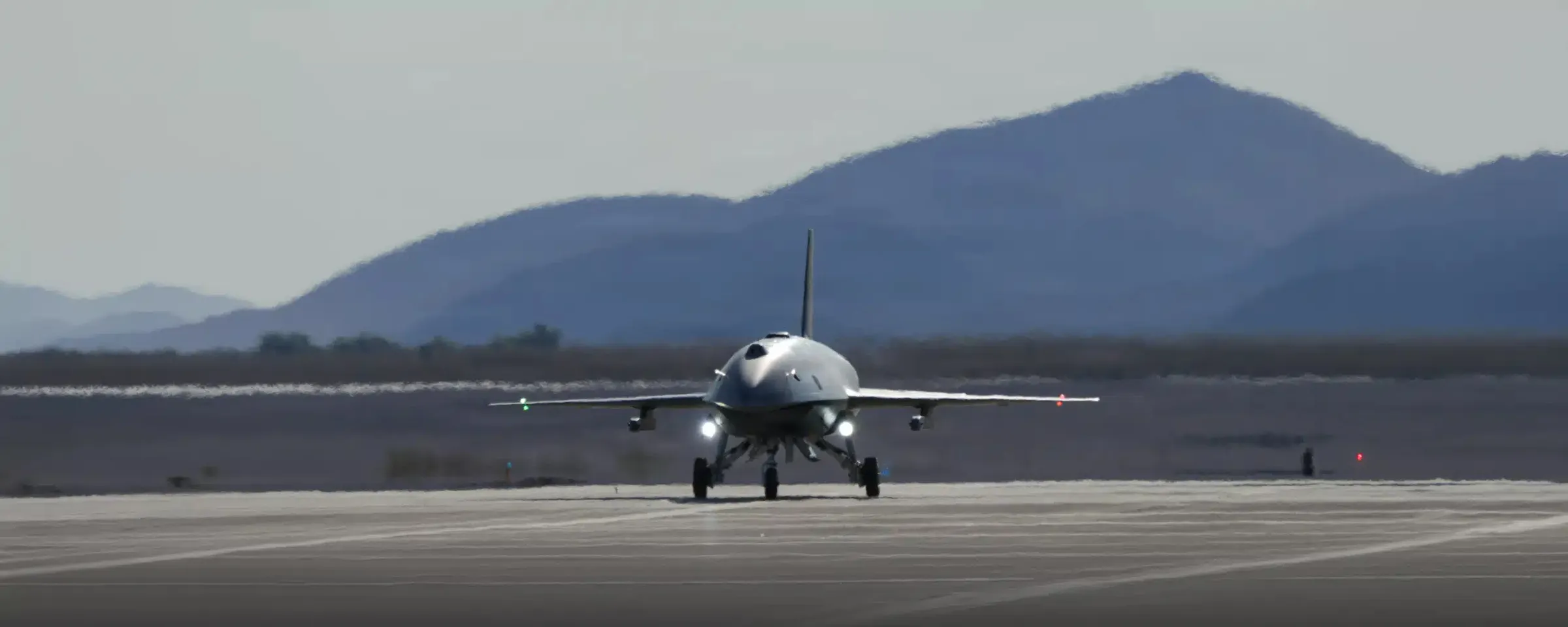
Combat drones in autonomous team flight: Hivemind, the software from Shield AI based on artificial intelligence (AI), has for the first time controlled several unmanned combat aircraft at once. The aircraft flew in coordinated formation and completed simulated air combat manoeuvres beyond visual range. With this, the US Air Force and the company have jointly reached a further milestone in the Collaborative Combat Aircraft (CCA) programme.
This was preceded on 8 October by a flight test in which a pilot in his F-22 directed an unmanned FQ-44A Fury. Hivemind evaluated his high-level commands in real time and translated them into flight manoeuvres and simulated combat tasks.
The next step came on 26 October. For the first time, several CCA aircraft flew together in formation and carried out coordinated tactical manoeuvres for beyond-visual-range (BVR) air combat. The aircraft did not act individually but as an autonomously cooperating formation.
Combat drones carry out what the pilot specifies
Under the concept, the tactical direction stays with the human in the cockpit. The AI handles execution and coordinates the actions of several unmanned aircraft with one another. In future, crewed fighter aircraft are to be supported by autonomous wingmen without their pilots having to control every single flight movement.
Todd Wesley, Vice President of Hivemind Engineering at Shield AI, describes the approach as follows: “Our mission autonomy seamlessly translates human intent into coordinated actions that achieve the desired mission effect.”
Key to this is the US Air Force’s Autonomy Government Reference Architecture (A-GRA). The architecture keeps autonomous mission control separate from the functions that belong to the respective aircraft. New software capabilities can thus be developed and integrated without having to adapt the entire platform.
New software version by the next flight day
Shield AI is working on further shortening development cycles. According to the company, it is close to a point at which the US Air Force could update the software in the night after a test flight and take off again with improved capabilities the very next day.
According to Shield AI, Hivemind is already integrated into more than 40 unmanned systems across different operational domains. The range extends from air and ground vehicles to platforms at sea and in space.
The latest tests indicate the direction of the CCA programme: instead of escort drones controlled individually, autonomous formations under human command are to take on tactical tasks together.
Photo credits
© US Air ForceBlundon
Continue exploring

Loitering munition: Cerberon and DND test Modular Lethality Kit in free flight

Tactical drones from Spain: Indra to build 147 Tarsis for the armed forces
Laser weapons for counter-UAS: Aerovironment to supply Locust X3 to the Middle East

Drone manufacturer Tekever: France orders 15 AR3 Evo, plant in Cahors opened
