





Naval counter-drone defence: Mehler Protection shows SCILT Naval for close-in protection at sea
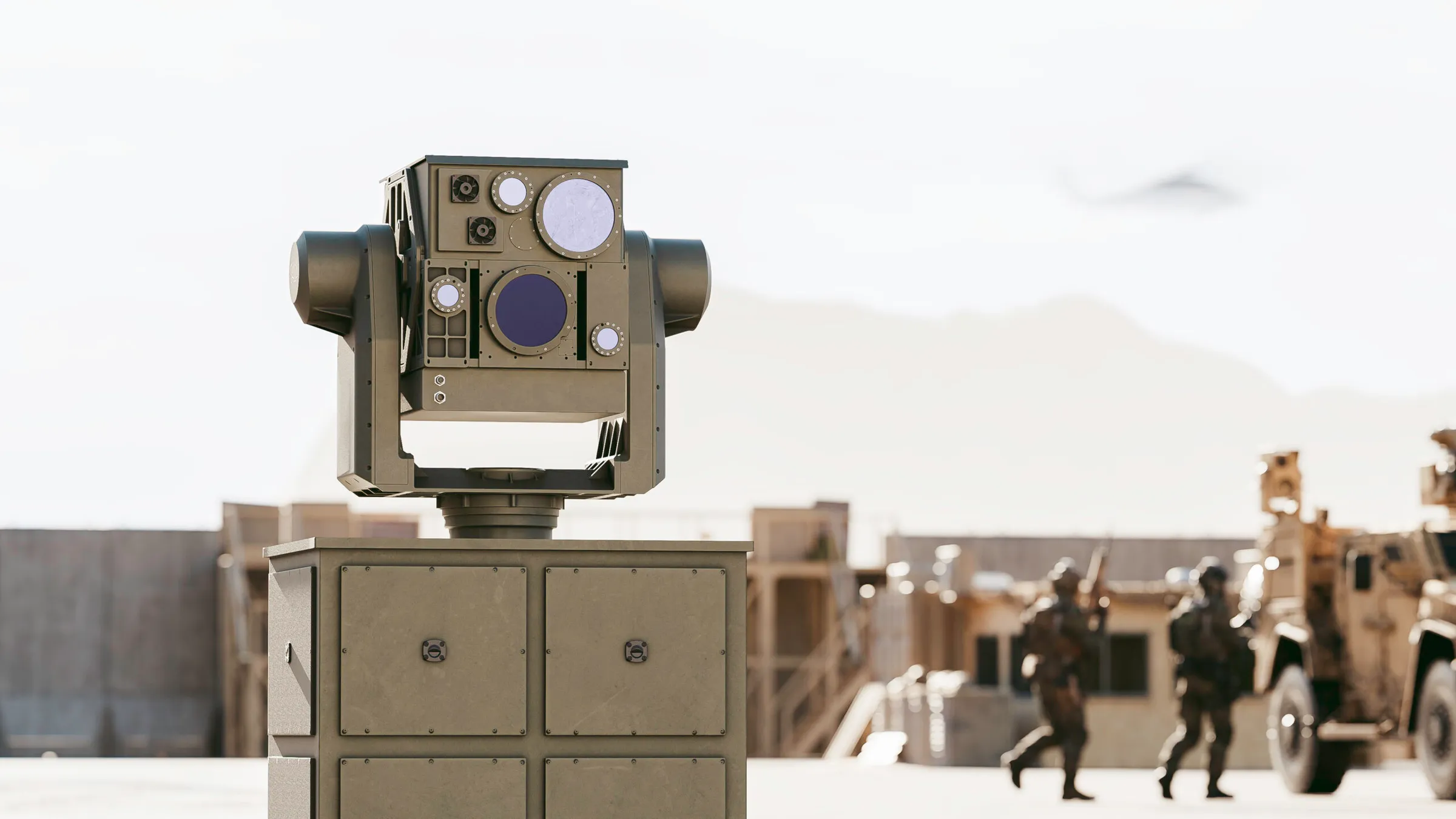
At SMM 2026 in Hamburg, Mehler Protection presented SCILT Naval, a naval counter-drone system for individual ships. The system is mounted directly on board and is intended to act where long-range air defence is only partly effective.

Mehler Protection has unveiled SCILT Naval, an active naval counter-drone system for the close-in protection of ships. The system is designed to protect individual platforms against small drones, loitering munitions and kamikaze-type unmanned aerial vehicles (UAV). The counter-UAV system is to close the gap between passive protective measures and large-scale air defence.
The presentation took place in Hamburg at Shipbuilding, Machinery & Marine Technology 2026 (SMM 2026). SCILT Naval was developed specifically for the immediate danger zone around a ship. These are distances at which long-range air defence systems and counter-UAV solutions tied to a task group cannot be used effectively, or only with restrictions.
Naval counter-drone defence as the platform's last protective layer
Current conflicts show that even heavily armed warships can come under pressure when small, low-cost drone systems are deployed against them in large numbers. The threat is particularly serious in ports and during canal transits, as well as during amphibious operations. Landing ships and stationary maritime facilities are also affected.
SCILT Naval is intended as the last active protective element, located directly on the respective platform. At close range it is to engage single targets as well as several threats appearing at the same time. The focus is mainly on first-person view (FPV) drones, loitering munitions and other small UAV types.
Sensors, effectors and operating logic are integrated directly on board. Electro-optical systems and other sensors are to detect threats and support the operator in making decisions. Like the SCILT system for off-road vehicles, SCILT Naval works in "man-in-the-loop" mode in its first configuration: the engagement is still triggered by a human operator. Gradual automation is planned as soon as the necessary approval and operating procedures allow it.
Alert levels, ammunition and integration on board
The system has three alert levels: detection, approach and firing. It engages targets with commercially available shotgun calibres. Compared with the land version, SCILT Naval is to have a greater effective range and to be able to reload automatically. According to Mehler Protection, the available range of effectors extends from fragmenting to armour-piercing variants.
Integration into existing command and sensor systems as well as into command and control (C2) systems is possible. Where suitable interfaces are lacking, SCILT Naval is also to operate autonomously, with its own reconnaissance and a complete kill chain on board. Additional operating and display units can be installed at several locations inside the ship. The crew can thus monitor the situation and operate the system away from the actual system position.
According to a press release, development took around 18 months. In 48 test series, Mehler Protection examined external and terminal ballistics, firing reliability and fragment distribution, plus maritime stresses such as salt spray, vibration and wave impact, and corrosion resistance. From these results, the company derived the effective range and effector configuration.
Photo credits
© Mehler Protection
Continue exploring

Loitering munition: Cerberon and DND test Modular Lethality Kit in free flight

Tactical drones from Spain: Indra to build 147 Tarsis for the armed forces
Laser weapons for counter-UAS: Aerovironment to supply Locust X3 to the Middle East

Drone manufacturer Tekever: France orders 15 AR3 Evo, plant in Cahors opened
