





Unmanned ground vehicles from ARX Robotics join British Asgard network
Unmanned ground vehicles are meant to work as a network: at the “Haraka Storm” exercise in Kenya, ARX Robotics connected Gereon for the first time to Asgard, the target acquisition network of the British Army.
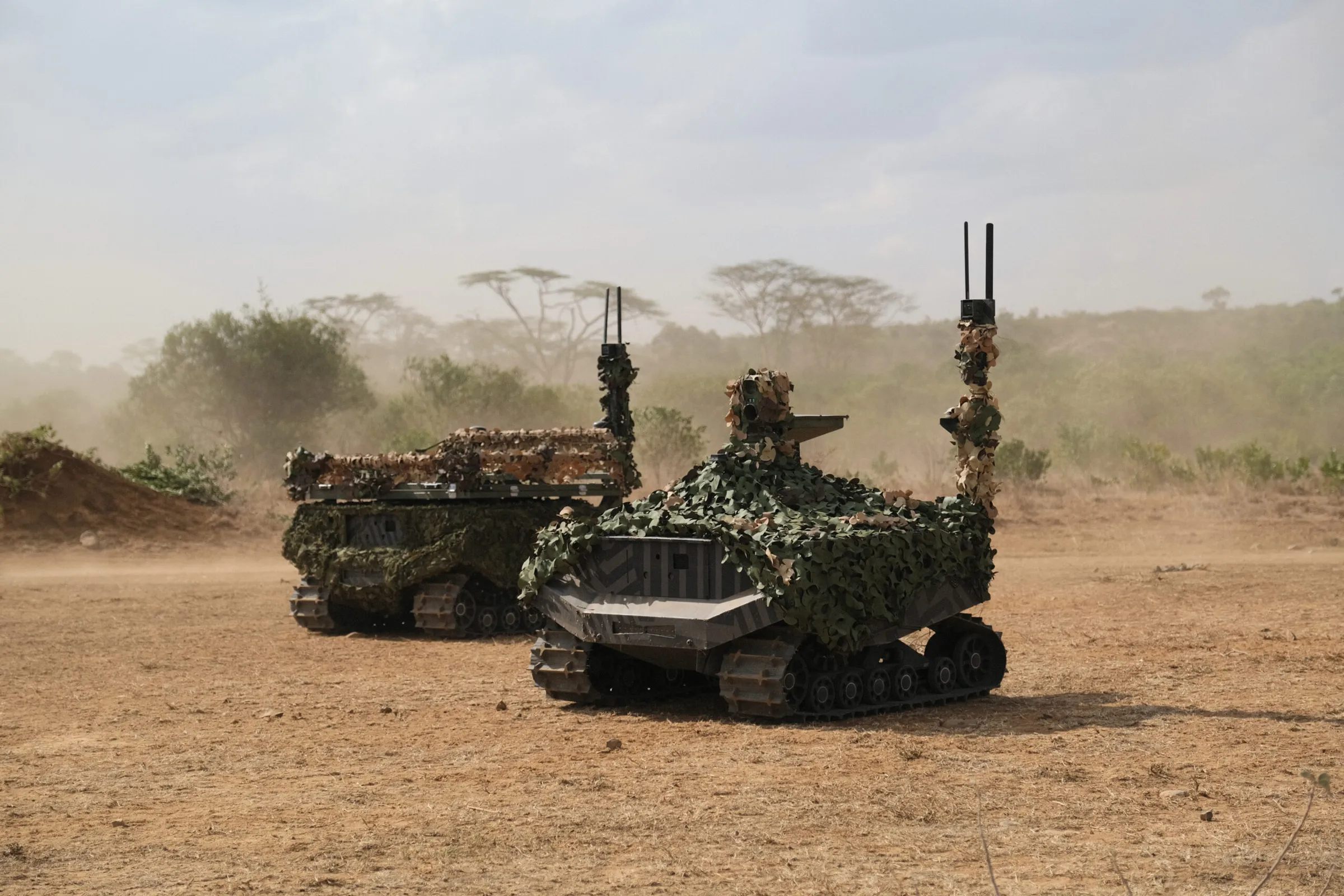
Unmanned ground vehicles from the German defence tech company ARX Robotics have been connected for the first time to Asgard, the AI-supported target acquisition network of the British Army. The vehicle in question was Gereon, which was successfully tested during the “Haraka Storm” military exercise in Kenya. According to the company, this accelerated the processes in the reconnaissance, decision and effects chain by a factor of ten.
Together with the 4th Brigade of the British Army, ARX Robotics UK deployed several Gereon vehicles for this purpose. The exercise focused mainly on integrating unmanned land systems into the British armed forces’ existing digital command and reconnaissance architecture.
Through the connection to Asgard, unmanned ground vehicles are no longer meant to work in isolation in future. As networked sensor platforms, they contribute to the common operational picture. The integration is intended to speed up military decision-making while reducing the risk to friendly soldiers.
Unmanned ground vehicles ahead of deployment on NATO’s eastern flank
In Estonia, ARX Robotics had already demonstrated the reconnaissance capabilities of its unmanned ground vehicles earlier this year during the “Spring Storm” military exercise. The activities in Kenya build on this.
The 4th Brigade of the British Army is scheduled to deploy to NATO’s eastern flank in April 2027. Against this background, the cooperation takes on particular importance. When unmanned systems are integrated into existing military structures, operational readiness and the protection of friendly troops are expected to improve.
Brigadier Tom Robinson, commander of the 4th Brigade of the British Army, says: “In preparing for future operations, exercises such as Haraka Storm are of decisive importance for understanding how new technologies can improve the operational capability of our soldiers. By deploying systems that have already proven themselves on the battlefield in Ukraine and integrating them into our command and control, we can further increase our military effectiveness and deter our adversaries.”
Networked systems instead of isolated solutions
The trial is part of a longer-term cooperation between ARX Robotics and the British Army. The aim is to provide unmanned systems that can be integrated into existing military structures as quickly as possible and adapted flexibly to changing operational requirements.
David Roberts, CEO of ARX Robotics UK, sees the decisive added value of unmanned land systems not only in the capabilities of the individual platform but above all in its networking with other military systems.
Roberts says: “This kind of cooperation is exactly what is needed to deliver new military capabilities in a short time. Ultimately, it is about giving soldiers better information earlier and faster while reducing their risks on operations.”
Photo credits
© ARX Robotics
Continue exploring

Drone protection strategy assigns responsibilities and procurement goals
Reconnaissance drones from Ukraine to be built in Germany with EUR 34 million

Drone protection in Austria, government plans drone situation centre and new counter-drone systems for police

Counter-drone defence in Austria to involve critical infrastructure operators
