





Counter-UAS in Denmark: Terma to create a nationwide drone situational picture
The military, authorities and infrastructure operators have so far processed their sensor data separately. A DALO contract with Terma is to change that: based on Helion and the FACE platform, a common situational picture is being created for Danish counter-UAS.
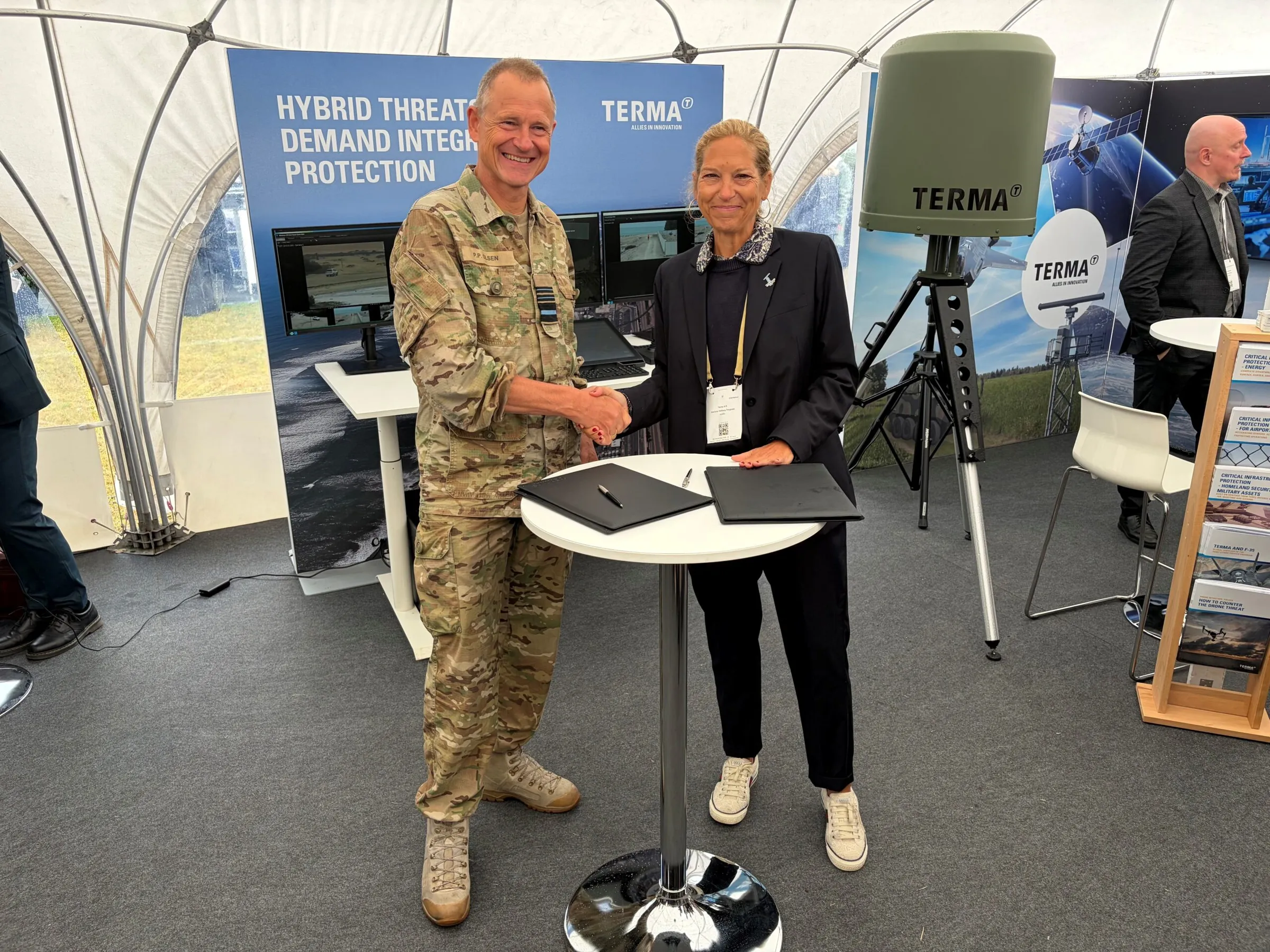
Denmark is taking the next step in expanding its counter-UAS capability with Terma. DALO, the Ministry of Defence’s acquisition and logistics organisation, has commissioned the Danish technology group to supply a new integrated command and control system for this purpose. At its centre is a common drone situational picture that the armed forces and other authorities are to be able to access in real time.
Today, both the Danish Armed Forces and civil authorities and operators of critical infrastructure run sensors – but their data mostly ends up in separate systems. The new solution is to bundle this information and thus generate a situational picture for the entire country.
Technically, the project builds on Helion, Terma’s multi-domain platform. It is to network existing and future sensors, process large volumes of data and extract the information that matters for command and control of operations. Local units are to have access to the common situational picture as well as higher command levels.
I am pleased about the signing of this agreement, which will strengthen Denmark’s ability to maintain an up-to-date drone situational picture. The new agreement with Terma is an important building block in establishing an effective counter-drone capability – both within the Danish Armed Forces and in Danish industry— Lieutenant General Per Pugholm Olsen, Head of DALO
AI analyses sensor data
The FACE platform from OSL Technology is also being integrated. The company has been part of Terma since 2025 and contributes its experience with systems for countering unmanned aircraft systems (counter-UAS). FACE merges data from radars and surveillance systems made by Terma as well as from sensors and effectors of other manufacturers.
Artificial intelligence is to analyse, classify and prioritise the sensor data. For operators this means that relevant drone activity is spotted sooner and countermeasures can be coordinated more quickly.
In a security environment in which drones pose a lasting and growing threat, the ability to detect, classify and respond to threats across different domains is of fundamental importance for national security— Henriette H. Thygesen, CEO of Terma
OSL Technology already has practical experience with counter-drone systems. At London Heathrow Airport, the company has been prime contractor and system integrator of the counter-UAS system since 2019. OSL is also equipping the Norwegian air bases Ørland and Evenes with corresponding systems.
Counter-UAS for the military and critical infrastructure
The architecture is open and modular, so that additional sensors, sites and countermeasures from different manufacturers can be integrated later. Control over the operational sensor data is to remain with Denmark.
The system is not intended solely for military facilities. It is also to be usable for drone incidents at airports, ports, energy facilities, government buildings and other critical infrastructure.
In countering drones, Denmark is thus relying on networking: information is to converge centrally instead of individual sites and sensor systems being considered in isolation. This is intended to shorten the time from detection through assessment to response. At the same time, it creates the basis for integrating new sensors and effectors into the system quickly as threats evolve.
Photo credits
© Terma
Continue exploring

Loitering munition Virtus from Stark: 45th Armoured Brigade “Litauen” tests it at “Freedom Shield 2026”

Drone stations for maritime surveillance: Rift begins tests off the French coast

Sea drones for the Baltic: Sweden buys surveillance from Saildrone as a service

Maritime drones: Eviden unveils SMX, an electromagnetic navigation sensor
