





Kamikaze drones for the US armed forces: Pentagon plans to order 30,000
Following the "Gauntlet" trials at Fort Benning, the winners have been selected and the order for 30,000 kamikaze drones is being prepared. The goal: low-cost systems down to every infantry squad – criticism from the Senate included.
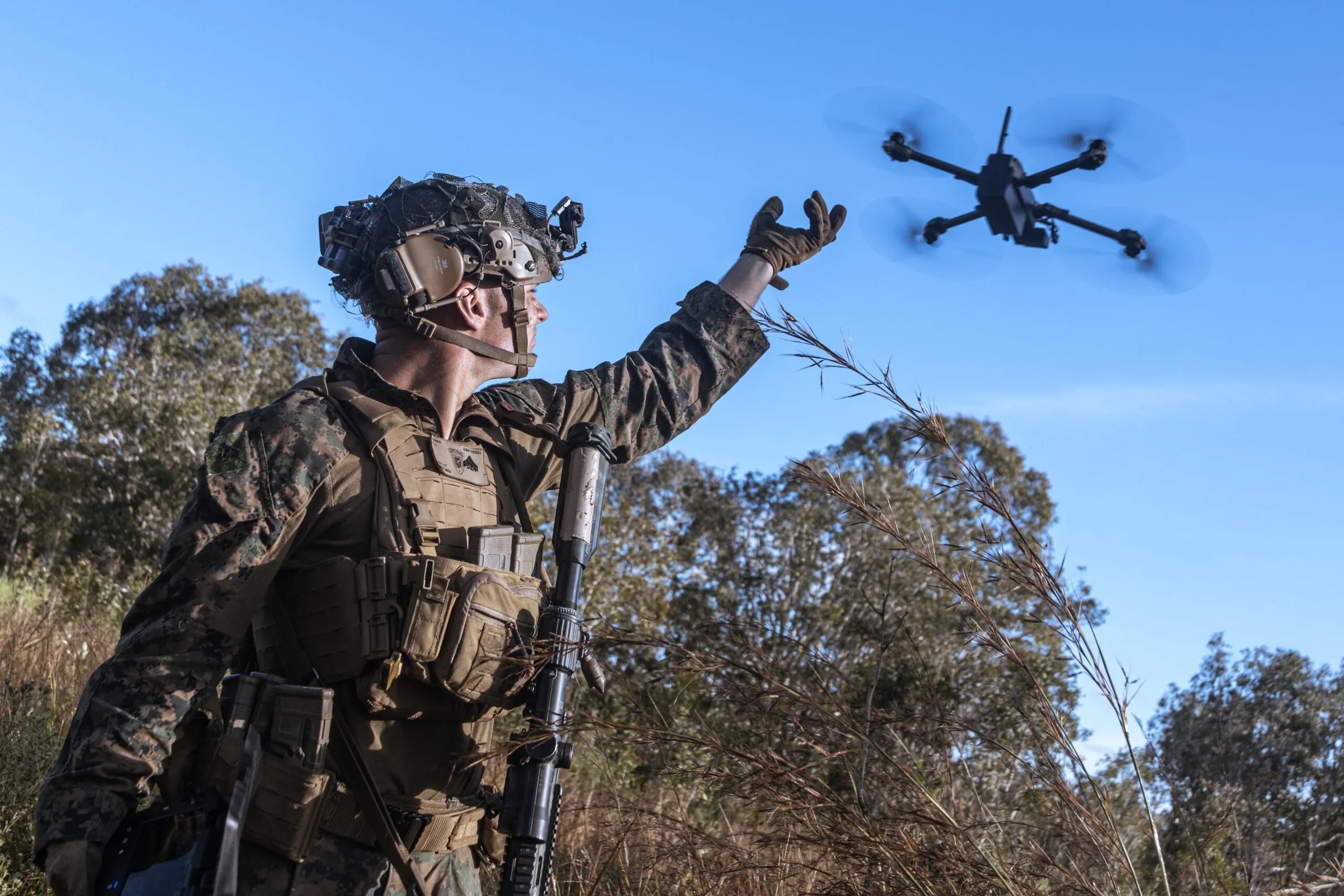
The US Department of Defense is about to order 30,000 kamikaze drones, known as one-way attack drones. They are being procured under the "Drone Dominance" initiative: with it, the Pentagon wants to equip the US armed forces quickly with inexpensive drones that can be deployed in large numbers.
The contracts go to the manufacturers whose systems held their own in the recently completed "Gauntlet" trials at Fort Benning (Georgia). 25 drone companies had taken part in the tests over the past two weeks. Their systems were evaluated under realistic combat conditions by around 100 soldiers from the US Army, the Marine Corps and special forces.
Among other things, the unmanned systems had to prove that they could hit targets precisely at distances of up to ten kilometres. Operators had only two hours to familiarise themselves with each system – a deliberately designed scenario to test usability and operational maturity under realistic conditions.
The competition ended last Sunday. In the coming days we will announce the winners and place the corresponding orders— Travis Metz, Drone Dominance programme manager at the Pentagon, before the Senate Armed Services Committee
The successful manufacturers will deliver a total of 30,000 small one-way attack drones; they are to reach military units within the next five months.
Kamikaze drones to become cheaper
For the first phase of the programme, the Pentagon currently expects about 5,000 dollars (around 4,600 euros) per drone. For 30,000 systems, this amounts to a total of 150 million dollars (about 138 million euros). In the long term, however, the unit price is to fall significantly, to around 2,000 dollars (about 1,840 euros).
A second test phase is already scheduled for August. The environment will then be considerably more demanding: the systems will face GPS and communications jamming, electronic warfare and other counter-drone measures, among other things. The Pentagon is also looking for solutions that reduce the cognitive load on operators.
The Department of Defense is deliberately pursuing an open innovation approach and does not prescribe specific technical solutions to the participating companies. US firms as well as international suppliers are to find their own innovative ways of meeting the challenges.
Goal: drones for every infantry squad
"Drone Dominance" originates in a memorandum presented by US Secretary of Defense Pete Hegseth in July 2025. In it, under the title "Unleashing US Military Drone Dominance", he called for every US Army infantry squad to be equipped with small one-way attack drones by the end of fiscal year 2026.
As a first step towards this, the Pentagon announced the "Gauntlet" trials in February.
Ukraine as a model
The US Senate welcomed the programme in principle but also voiced criticism. Senators Jeanne Shaheen and Richard Blumenthal complained that the Pentagon was cooperating too little with Ukrainian drone manufacturers.
Shaheen reported on her recent talks with producers in Odesa. There, thanks to wartime experience, drones are in some cases further developed every two weeks.
Metz countered that several Ukrainian manufacturers had taken part in the "Gauntlet" trials and are now planning to build production capacity in the USA. Some of them are likely to be among the companies now receiving contracts.
Photo credits
© Marine Corps Lance Corporal Victor Gurrola
Continue exploring

Loitering munition Virtus from Stark: 45th Armoured Brigade “Litauen” tests it at “Freedom Shield 2026”

Drone stations for maritime surveillance: Rift begins tests off the French coast

Sea drones for the Baltic: Sweden buys surveillance from Saildrone as a service

Maritime drones: Eviden unveils SMX, an electromagnetic navigation sensor
