





VTOL drone AVALON: Polish armed forces test new system at “Amber Defender-26”
At one of the largest exercises of the year, Poland is relying on a domestically developed VTOL drone: AVALON from Under Ant is to handle reconnaissance and logistics, fly in swarms and launch automatically from a mobile platform.
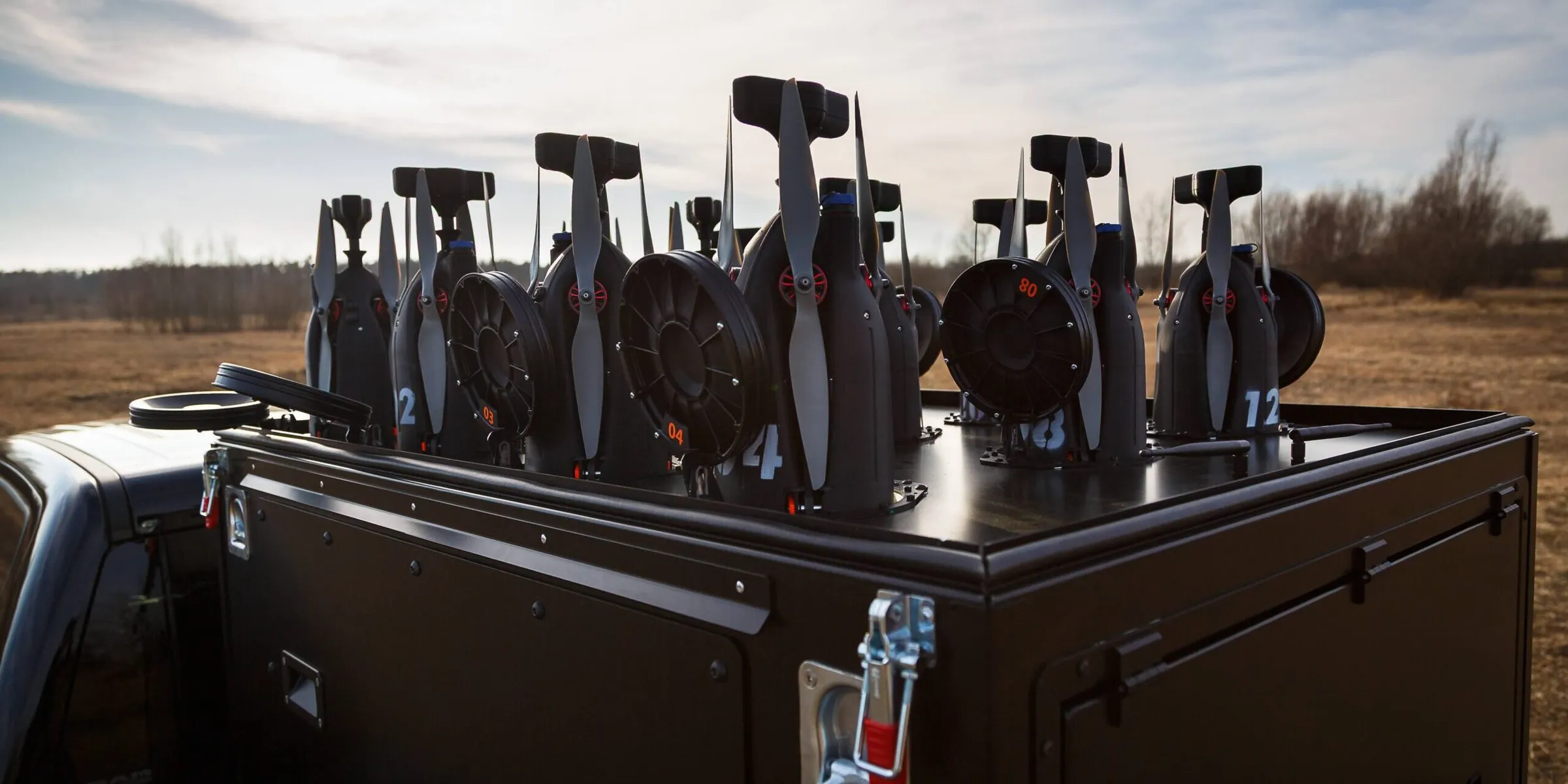
The Polish armed forces have announced that they will test the new AVALON drone – an aircraft designed for vertical take-off and landing (VTOL). The framework is the large-scale national exercise “Amber Defender-26” (“Bursztynowy Obrońca-26”). The tests of the VTOL drone focus on reconnaissance and logistics missions, but also on advanced cooperation between several aircraft in a swarm and automated launch from a mobile platform.

According to the General Staff of the Polish Armed Forces, the AVALON unmanned aircraft system is used for reconnaissance, surveillance and logistic support missions – including cargo transport. Representatives of the press office of the Polish armed forces stated:
“The development of unmanned systems requires regular tests under conditions that simulate real scenarios. It is precisely these tests that allow us to evaluate the solutions that best meet the requirements of the Polish armed forces”— Representatives of the press office of the Polish armed forces
What the VTOL drone from Under Ant is meant to deliver
AVALON was developed by the Polish drone manufacturer Under Ant. The advanced drone takes off and lands vertically and, as a modular unmanned aerial vehicle, is designed to fly fully autonomous missions, including “swarm” operations. In doing so, it redefines the range of applications both on the modern battlefield and in the civilian sector. The main applications of the AVALON system are supporting armed forces and special services, facilitating tactical reconnaissance, precisely dropping payloads and neutralising threats without putting the lives of military personnel at risk.
Because drones can search large areas in a short time, they are extremely effective in search and rescue missions and thus ideal tools in disaster areas. Compared with conventional methods, response times can be reduced by up to 60 per cent. The system is also outstandingly suited to monitoring critical infrastructure: border patrols and the inspection of power lines or pipelines become simpler, cheaper and considerably safer. Automated inspections can cut the workload by up to 70 per cent.
Logistics is also important. AVALON can deliver medical supplies, spare parts and other goods precisely to hard-to-reach locations. The entire system is designed to reduce costs and operational risks as far as possible. By automating tasks in environments that are dangerous or entirely inaccessible to humans, AVALON significantly increases both personnel safety and operational efficiency.

Performance data and swarm capability
The drone reaches its top speed at 28 m/s – more than 100 km/h; flight endurance is up to 40 minutes and range 30 kilometres. It is flown in one of two main modes, manual or fully autonomous. The design meets protection class IP54 and is thus protected against dust and small amounts of water. Thanks to its VTOL capability, the drone needs no runway, which makes it very versatile: it can be deployed in almost any environment, from densely built-up areas to rough or uneven terrain. The modular design and simple, quick set-up allow it to be made ready for use rapidly without complex procedures. AVALON thus combines advanced technology with practical utility under real operating conditions.
It is worth highlighting that the unmanned system can operate in a swarm. Proprietary coordination algorithms and real-time communication systems allow several units to act synchronously and handle complex scenarios with unprecedented precision. This technology relies largely on AVABOX, an integrated mobile launch platform. The platform is intended for installation on pick-up trucks and launches up to 12 AVALON drones automatically and in succession. In the air, the drones carry out the tasks set by the operator autonomously and act as a unified, cohesive team. This scalability considerably increases operational reach, precision and efficiency.
Large-scale exercise with more than 10,000 soldiers
The “Amber Defender-26” exercise series held in Poland was among the largest exercises of the Polish armed forces this year. More than 10,000 soldiers from all service branches and hundreds of military vehicles took part, including K2 tanks, Borsuk infantry fighting vehicles and K9 self-propelled howitzers. The exercises were coordinated by the General Staff of the Polish Armed Forces and conducted by the General Command of the Branches of the Armed Forces.
The scenario covered a spectrum across several domains. Operational and tactical activities of the troops were simultaneously developed further under regional plans and integrated into the national deterrence and defence programme “Eastern Shield”. New strike and reconnaissance platforms were deployed, and lessons from the war in Ukraine were put into practice. This covered the entire spectrum of modern combat, from conventional ground operations to cyber operations. In addition, the manoeuvre was said to help strengthen the defence capabilities of Poland and NATO and to demonstrate readiness for collective defence and deterrence.
Photo credits
© Under Ant
Continue exploring

Loitering munition Virtus from Stark: 45th Armoured Brigade “Litauen” tests it at “Freedom Shield 2026”

Drone stations for maritime surveillance: Rift begins tests off the French coast

Sea drones for the Baltic: Sweden buys surveillance from Saildrone as a service

Maritime drones: Eviden unveils SMX, an electromagnetic navigation sensor
