





GPS-free navigation: dForce Technologies makes small drones autonomous through software
With Force AI, Austrian start-up dForce Technologies aims to give low-cost small drones GPS-free navigation – a capability so far reserved for large, expensive systems. No additional hardware is to be required.
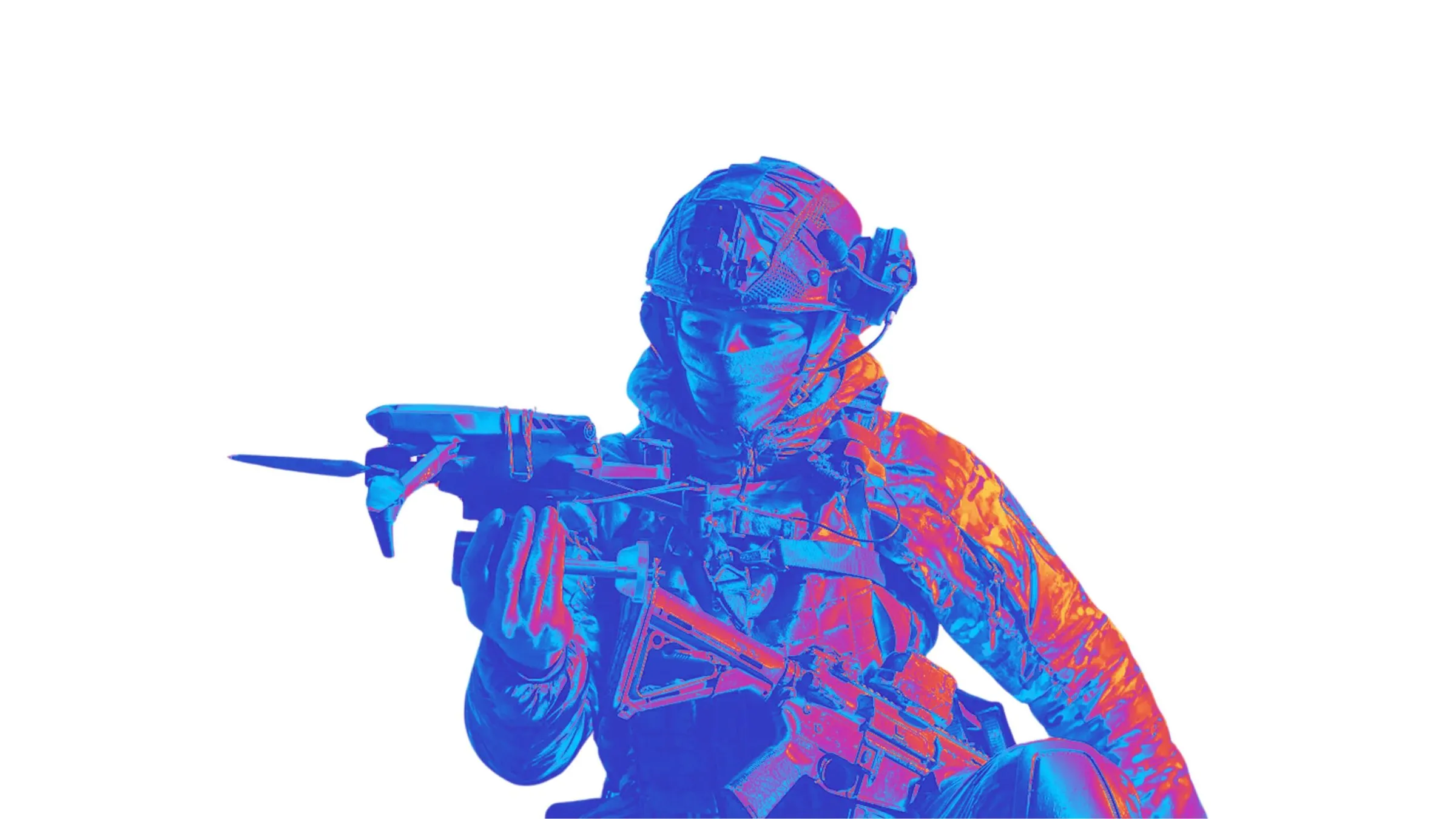
GPS-free navigation, and thus navigation without a satellite link, has so far only been possible for much larger and more expensive systems. New software from Austrian defence-tech start-up dForce Technologies is now set to give small drones this autonomous capability for the first time.
A scenario from military operations: a first-person view (FPV) drone is to reconnoitre an area or engage an enemy. One press of a button is enough, and the mission runs on its own – autonomously and without any satellite navigation. Because the drone needs no radio signals, electronic interference such as jamming or spoofing (signal falsification) cannot harm it either.
Behind this is Force AI, software developed by dForce Technologies. Using a synthetic GPS, the drone finds its way without relying on satellite signals. Vitalii Yehorov of dForce describes the principle: “Put simply, we make a drone's flight controller believe that it still has a GPS connection – even though there is none.”
Modules covering very different tasks build on this navigation basis, from enemy reconnaissance to parcel delivery. Yehorov says: “We offer a dual-use product that can be used for both military and civilian purposes, although our focus is clearly on defence tech.”
Why GPS-free navigation on small drones has failed so far
For long-range drones such as Bayraktar or Shahed, autonomous flight has long been standard. Cheap small drones, by contrast, could hardly be equipped in the same way: the necessary hardware would have cost many times the purchase price of the drone itself while reducing the payload. The weight would have been too high, and so would the price.
This is exactly where Force AI comes in. Yehorov explains: “Because our product is a pure software solution, it needs no additional hardware module, no additional cameras or other sensors.” The software is installed with a simple firmware update that optimises the drone's performance.
“Because our product is a pure software solution, it needs no additional hardware module, no additional cameras or other sensors.”
Vitalii Yehorov, Managing Director and Head of Development at dForce International
The technology has been under development since 2022 and is now ready for use. “Talks with drone manufacturers show that our technology offers added value that is in demand,” says Yehorov. According to him, dForce Technologies is one of the few companies in this sector and, so far, the only one to have tested the technology under real conditions.
Photo credits
© dforce international
Continue exploring

Loitering munition Virtus from Stark: 45th Armoured Brigade “Litauen” tests it at “Freedom Shield 2026”

Drone stations for maritime surveillance: Rift begins tests off the French coast

Sea drones for the Baltic: Sweden buys surveillance from Saildrone as a service

Maritime drones: Eviden unveils SMX, an electromagnetic navigation sensor
