





Military drones as a gift: Türkiye hands two Bayraktar TB2 to Bosnia and Herzegovina
Bosnia and Herzegovina receives drones, control stations and training free of charge. Kosovo, Serbia, Montenegro, Croatia and Slovenia are also relying on military drones – from the Bayraktar TB2 and Chinese CH-95 to domestic developments.
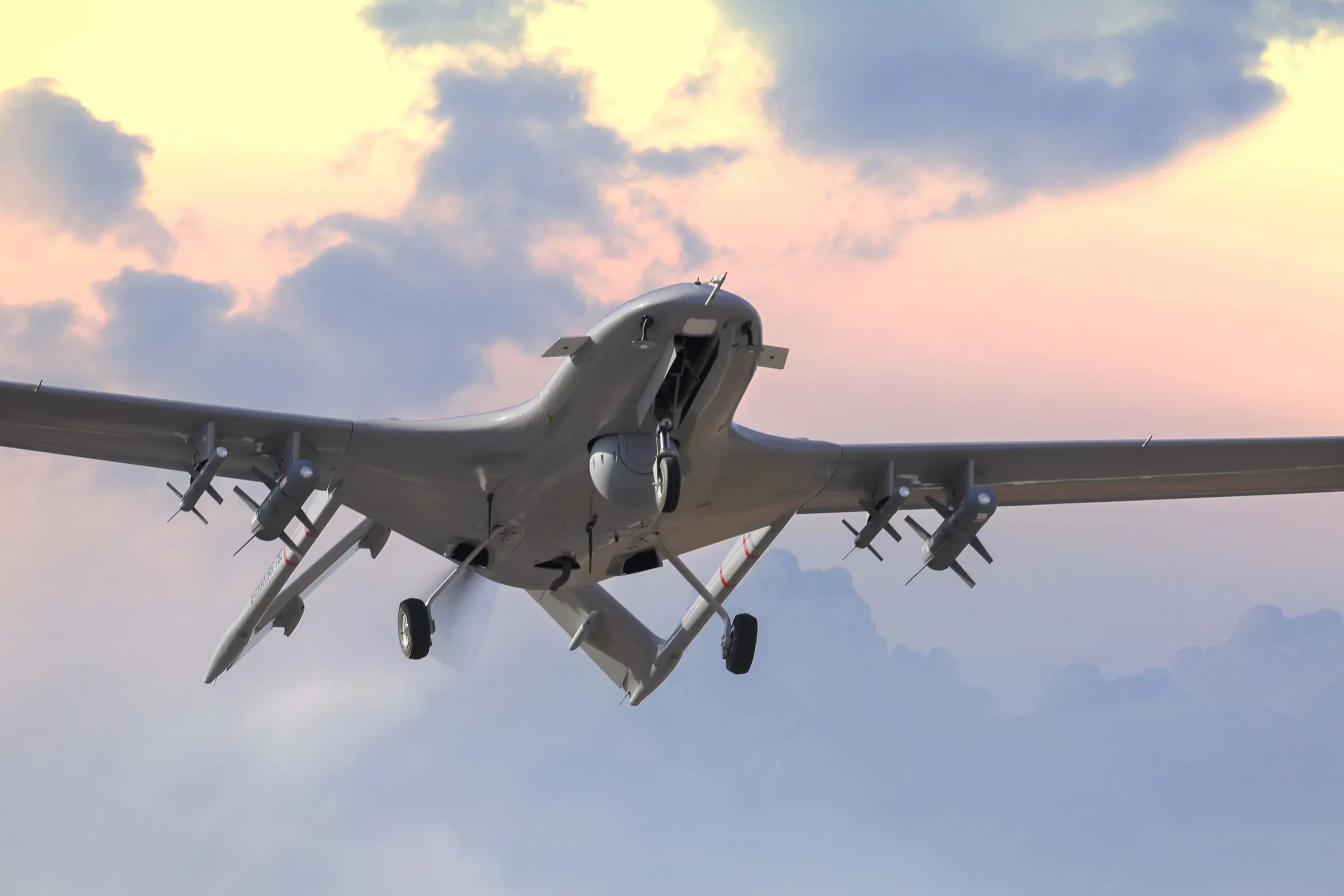
Bosnia and Herzegovina (BiH) is receiving two Bayraktar TB2 military drones from the Turkish manufacturer Baykar as a donation from Türkiye. The basis is a military assistance agreement, as Deutsche Welle's Bosnian service reports.
Not only the multi-role drones themselves are provided free of charge, but also the necessary control stations and personnel training.
The Bosnian Ministry of Defence speaks of a “message of support for state institutions and a clear partnership between Bosnia and Herzegovina and Türkiye”.
As Minister Zukan Helez explained, Bosnia and Herzegovina will incur no costs; the state will nevertheless become the owner of the two drones. They are to be operated under the command of the Joint Staff of the country's armed forces.
Beyond the two donated Bayraktar TB2, Bosnia has also negotiated the purchase of four more unmanned aerial vehicles (UAV) from Türkiye, including the associated control stations.
Military drones in Kosovo and Serbia
Kosovo reportedly bought five Bayraktar TB2 in 2023. However, it may not fly them without the consent of the commander of the NATO-led KFOR peacekeeping force, which is primarily responsible for the airspace over Kosovo.
Under UN Security Council Resolution 1244 of 1999, supreme authority over this airspace rests with the KFOR commander. Only Kosovo's upper airspace is open to commercial flights; the lower airspace may be used for specific purposes with the KFOR commander's prior approval.

Serbia combines foreign drones with UAVs developed and produced domestically. On 4 July 2020, the Serbian Ministry of Defence announced that it had taken delivery of six new CH-92A unmanned aerial vehicles from the People's Republic of China.
The CH-92A is a multi-role drone that can be armed, with an operational radius of more than 250 kilometres. It reaches a maximum altitude of 5,000 metres and flies at just under 200 kilometres per hour.

In addition, there are Chinese CH-95 drones, whose procurement President Aleksandar Vučić and Defence Minister Nebojša Stefanović announced on 15 September 2021. With a 20.5-metre wingspan and a take-off mass of 1,100 kilograms, it stays airborne for up to 20 hours with a payload of up to 200 kilograms. It can be armed with various laser-guided missiles and glide bombs.
Serbia's UAV efforts began earlier, however, in 2008 with an Israeli Aeronautics Orbiter 1. Several domestically produced reconnaissance drones, armed drones and loitering munitions followed, such as the Sila 750C UCAV (unmanned combat aerial vehicle) or Gavran 145. Serbia is also said to have supplied domestically produced drones to Montenegro.
Croatia and Slovenia build up their fleets
Drones also play a role in Croatia: on 21 November 2024, Defence Minister Ivan Anušić and Baykar Chairman Haluk Bayraktar signed a contract for six Bayraktar TB2 worth 67 million euros.
Danas sam s izvršnim direktorom turske tvrtke @BaykarTech potpisao ugovor o nabavi besposadnog zrakoplovnog sustava Bayraktar TB2 za Oružane snage Republike Hrvatske. Ulaganjem @VladaRH i @MORH_OSRH vrijednim 67 milijuna eura, opremamo Hrvatsku vojsku jednim od najboljih sustava… pic.twitter.com/lmhDsDfJxu
Delivery is scheduled for 2026. The package comprises electro-optical cameras, a command and control centre, an initial spare parts kit for 4,000 flight hours, initial armament and fixed and mobile radio and data transmission facilities providing dual-redundant radio coverage of the entire Croatian territory.
The Centre for Unmanned Aircraft Systems, a unit of the General Staff's Intelligence Regiment (OP), has been based in Pula since 2019. It operates several unmanned aircraft systems with trained operators and cooperates with the Croatian Navy, the Croatian Air Force and the Croatian Army.
According to its commander, Major Zvonimir Mravunac, the unit uses Orbiter and Skylark 1 UAVs as well as Bojnik training UAVs.
In Slovenia, the One Drone consortium has been developing a vertical take-off and landing (VTOL) UAV called Galeb since 2020. The unmanned aerial vehicle is intended for operation on the patrol vessel “Triglav”.

The ship has been in dock at the Trieste shipyard since 2020; after extensive modernisation and upgrading, it is due to return to service in 2026. Whether Galeb will then prove itself under the difficult conditions on board remains to be seen.
In addition, the Slovenian Armed Forces received two Belin-V UAV systems with a total of six drones in 2023. The battery-powered drone is intended for intelligence, surveillance and reconnaissance (ISR) missions at tactical level.
Photo credits
© Baykar · © Facebook/Albin Kurti · © Serbia MoD · © One Drone
Continue exploring

Loitering munition Virtus from Stark: 45th Armoured Brigade “Litauen” tests it at “Freedom Shield 2026”

Drone stations for maritime surveillance: Rift begins tests off the French coast

Sea drones for the Baltic: Sweden buys surveillance from Saildrone as a service

Maritime drones: Eviden unveils SMX, an electromagnetic navigation sensor
