





Counter-UAS: Embraer upgrades the A-29 Super Tucano into a “drone killer”
Laser-guided rockets, wing-mounted guns and new data links: Embraer is adding Counter-UAS to the A-29 Super Tucano's range of missions. The light COIN and close air support aircraft is set to become a low-cost drone interceptor.
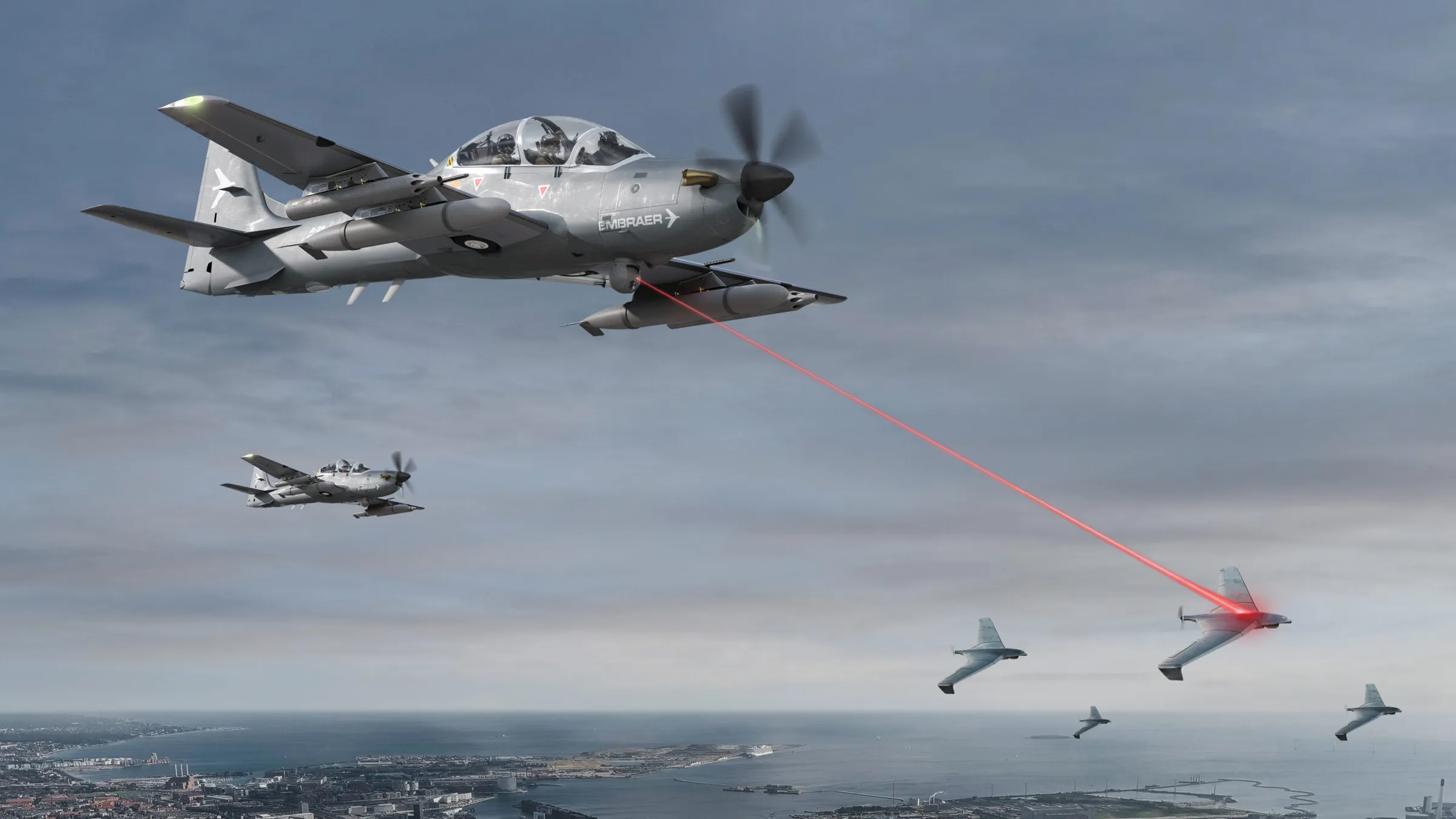
A new role in Counter-UAS: Embraer is expanding the already broad range of missions of the A-29 Super Tucano. Armed with laser-guided rockets and wing-mounted guns, the light aircraft for COIN operations and close air support becomes a drone interceptor.
The basis is mainly existing sensors and systems. New additions include special data links through which target coordinates are received and targets prioritised. This is intended to let the aircraft counter modern unmanned threats effectively and at low cost – with laser-guided rockets and .50-calibre heavy machine guns mounted in the wings.

Growing need for Counter-UAS
Bosco da Costa Junior, President and CEO of Embraer Defense & Security, explains: “We are continuously expanding the A-29's capabilities to meet the current challenges of many nations worldwide”. And: “The ongoing challenges of modern warfare and recent conflicts around the world have highlighted the urgent need for counter-drone solutions. The A-29 is the ideal tool to engage unmanned aerial systems effectively and cost-efficiently, and it extends the aircraft's already extensive range of missions, which includes close air support, armed reconnaissance and advanced training, among others.”
To date, the aircraft has flown border surveillance, air patrols, air escort and airspace surveillance, as well as close air support (CAS) and armed reconnaissance; it is also used for pilot training and JTAC training (Joint Tactical Air Controller). Unpaved runways and forward bases are sufficient as operating bases for the A-29; 22 air forces worldwide fly it.
Embraer markets the Super Tucano as the most capable multi-role aircraft in its category: maintenance effort is said to be low, reliability and availability high, structural integrity assured and life-cycle costs low. With more than 600,000 flight hours, it leads its class worldwide.
Photo credits
© Embraer
Continue exploring

Loitering munition Virtus from Stark: 45th Armoured Brigade “Litauen” tests it at “Freedom Shield 2026”

Drone stations for maritime surveillance: Rift begins tests off the French coast

Sea drones for the Baltic: Sweden buys surveillance from Saildrone as a service

Maritime drones: Eviden unveils SMX, an electromagnetic navigation sensor
