





VTOL drone Evo-LE: Delta Quad promises eight hours of endurance for ISTAR missions
Delta Quad presented the Evo-LE at the first Eudex in Essen and the JAPCC held in parallel. According to the manufacturer, the electric VTOL drone stays airborne for up to eight hours, covers 480 kilometres and is available immediately.
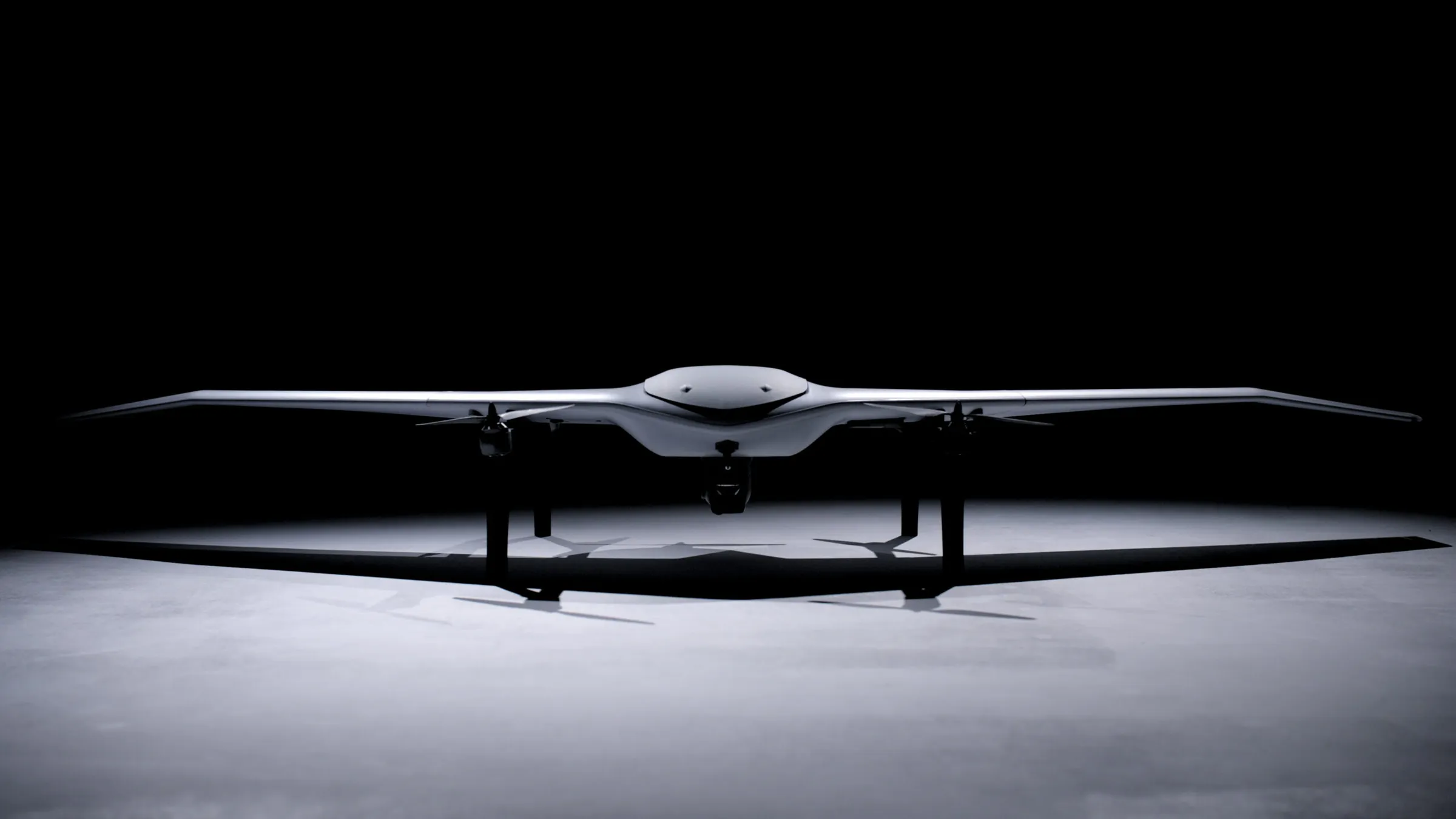
A drone with vertical take-off and landing (VTOL) that stays airborne for up to eight hours – this is how Dutch manufacturer Delta Quad describes its Evo-LE (Long Endurance). The new long-range version of the electric VTOL drone family was presented at the first edition of the Eudex trade fair in Essen and at the NATO-affiliated JAPCC (Joint Air and Space Power Conference 2026), held in parallel at the same venue. Delta Quad developed the system specifically for long-duration intelligence, surveillance, target acquisition and reconnaissance (ISTAR) missions.
According to the company, extensive operational experience, user feedback and several thousand flight hours under real operating conditions form the basis of the development. It is intended to allow large, hard-to-access areas to be reconnoitred and monitored – without the need for runways.
VTOL drone with 480 kilometres of range and 1.5 kilograms of payload
Delta Quad states a range of up to 480 kilometres for the Evo-LE – depending on payload, mission profile and environmental conditions. The radio link is specified at up to 120 kilometres. With a maximum take-off weight of 13 kilograms, the aircraft carries up to 1.5 kilograms of payload.
Several changes together enable the longer endurance: a new battery technology with higher energy density, a dual-battery configuration, a revised electrical architecture and an optimised VTOL propulsion system. The platform’s operating range extends from -20 degrees Celsius to +45 degrees Celsius; it meets protection class IP54.
In addition to classic ISTAR missions, the manufacturer names border surveillance and operation as a communications relay as mission profiles. Anti-jamming functions, secure communication systems and autonomous navigation solutions are available as options. Because the aircraft takes off and lands vertically, the tightest of spaces is sufficient for operation.
Ross Jackson, CCO at Delta Quad, puts the longer endurance into context as follows:
Endurance fundamentally changes what a mission can achieve. A longer time on station over the area of operations gives operators greater continuity of the information gathered and reduces the need to swap systems during a mission— Ross Jackson, CCO at Delta Quad
The Evo-LE offers defence and security organisations a practical way to conduct airborne reconnaissance and surveillance missions over longer periods while retaining the operational flexibility of an electrically powered VTOL system.— Ross Jackson, CCO at Delta Quad
Built on the Block 3 airframe, available immediately
The technical basis of the Evo-LE is the established Block 3 airframe of the Evo family. Compared with earlier versions, the aircraft withstands weather better, is better protected against the ingress of water and dust and proves more robust in field use.
The existing Evo platform focuses on maximum flexibility in payload integration; the new Evo-LE, by contrast, is aimed at users for whom the longest possible time on station in the area of operations is the top priority.
According to the company, the Evo-LE is available immediately. Delta Quad also provides training, technical support and lifecycle services for operators.

Photo credits
© DeltaQuad
Continue exploring

Loitering munition Virtus from Stark: 45th Armoured Brigade “Litauen” tests it at “Freedom Shield 2026”

Drone stations for maritime surveillance: Rift begins tests off the French coast

Sea drones for the Baltic: Sweden buys surveillance from Saildrone as a service

Maritime drones: Eviden unveils SMX, an electromagnetic navigation sensor
