





Gambit combat drone for Europe: General Atomics presents CCA concept in Oberpfaffenhofen
A flight-proven GA-ASI platform combined with a European mission system: in Oberpfaffenhofen, GA-Europe and GA-ASI showed German industry representatives what a European version of the Gambit combat drone could look like. Workshops and talks are to follow.
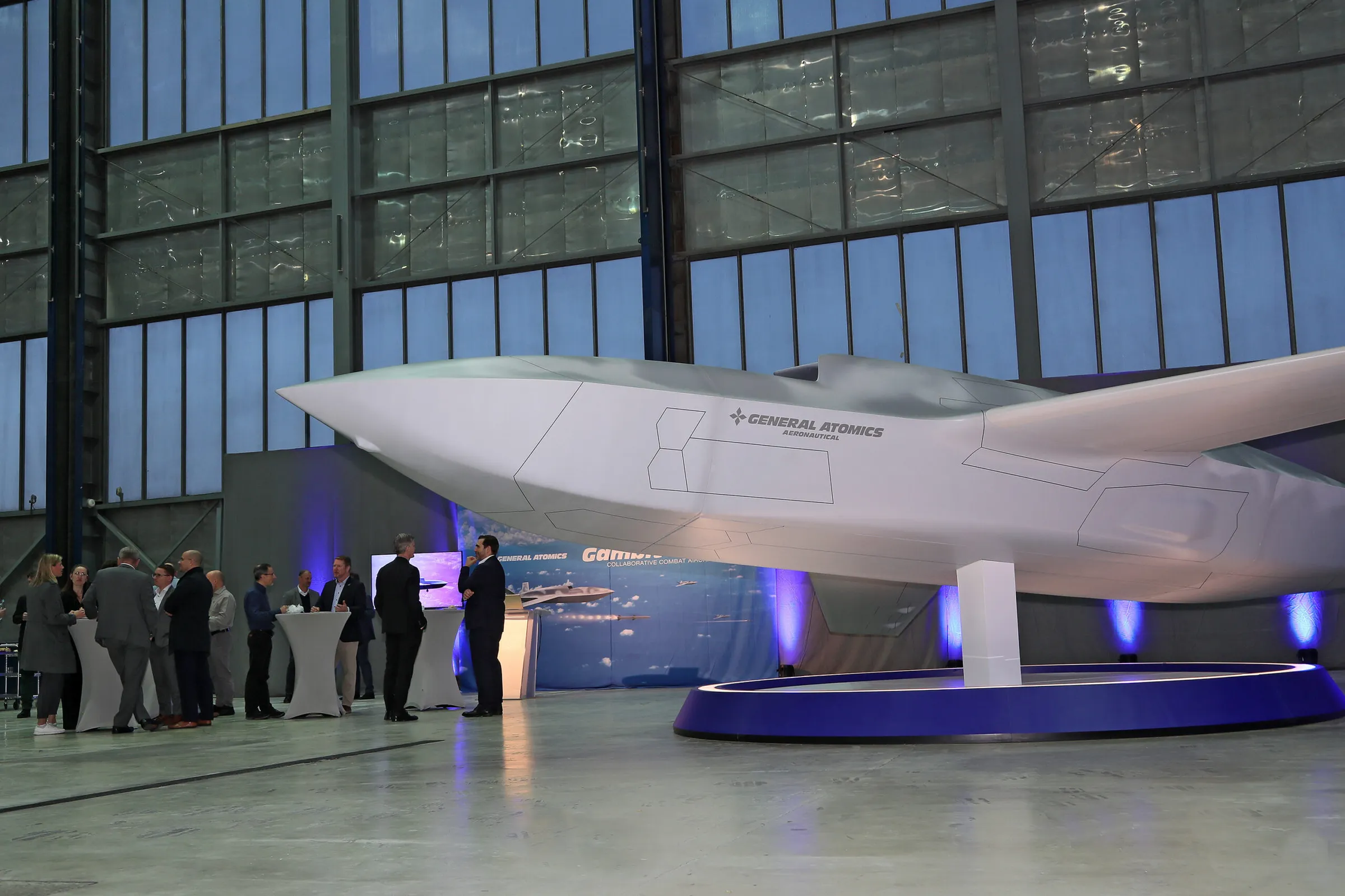
At Oberpfaffenhofen special airfield, General Atomics Europe (GA-Europe) and General Atomics Aeronautical Systems (GA-ASI) presented their vision of a European version of the Gambit series combat drone. The concept combines a platform already flight-tested by GA-ASI with a European mission system. The US manufacturer sees this as a “realistic technological path to providing unmanned air combat capabilities for European armed forces”.
Representatives of leading German industrial companies were given a first look at the technology during the presentation – from fields such as sensors, artificial intelligence, mission systems, software, data links and system integration. Topics included the architecture, the lines of integration and possible industry contributions to a European CCA. Strategically, the preview reflects Europe's growing need for scalable, interoperable and deployable CCA systems and unmanned combat aerial vehicles (UCAV).
YFQ-42A as the basis of the combat drone
For the US Air Force's “Collaborative Combat Aircraft Program Increment 1”, GA-ASI has developed a first derivative of the Gambit series, which is already in flight testing under the designation YFQ-42A. Thanks to its low signature and internal weapons bay, the semi-autonomous platform is suitable for both air-to-air and air-to-ground missions. Its autonomy core was trained for more than five years on GA-ASI's MQ-20 Avenger, which is also jet-powered. In a press release, the company writes that this operational lead “gives the system a level of maturity unique in this class”.
The preview also gave considerable space to the integration options in Oberpfaffenhofen, where General Atomics AeroTec Systems is based. According to General Atomics, its infrastructure and many years of experience in modifying, integrating and testing aviation systems offer “the best conditions for demanding technical work within a European CCA programme”.
Linden P. Blue, CEO of General Atomics Aeronautical Systems, explained the approach: “Since real threats can only be met with real capabilities, our approach to a European CCA is deliberately pragmatic in order to meet time-critical needs: we combine proven technologies that we have already flight-tested with a European mission system, creating a low-risk transatlantic path to modern CCA capabilities.”
Harald Robl, CEO of General Atomics Europe, added: “The Oberpfaffenhofen site has the necessary technical depth and aviation expertise for complex integration and adaptation work. The exchange with European industry is an important step towards structuring possible contributions and lines of cooperation at an early stage.”
Over the coming months, GA-Europe and GA-ASI intend to continue the technical exchange with partners from industry and politics. Additional technical workshops and bilateral talks are planned.
Photo credits
© General Atomics
Continue exploring

Loitering munition Virtus from Stark: 45th Armoured Brigade “Litauen” tests it at “Freedom Shield 2026”

Drone stations for maritime surveillance: Rift begins tests off the French coast

Sea drones for the Baltic: Sweden buys surveillance from Saildrone as a service

Maritime drones: Eviden unveils SMX, an electromagnetic navigation sensor
