





Drone production in Europe: Highcat presents modular systems and microfactories at KSK Symposium
Moving away from Asian supply chains: Highcat wants the hardware, batteries, electronics and software of unmanned systems to be made largely in Europe. How the German company plans to scale drone production and what is planned for Ukraine.
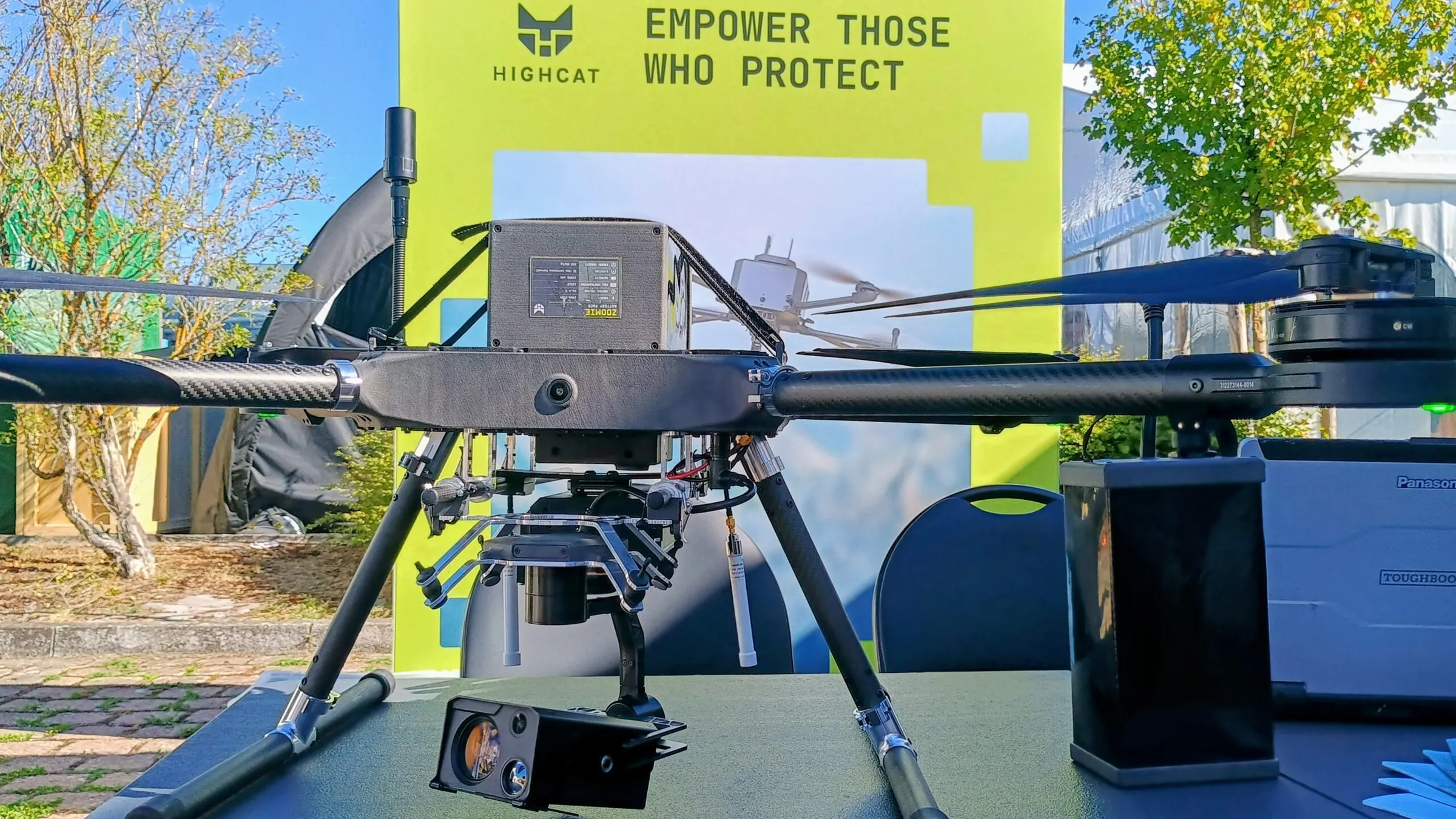
Highcat is driven by an ambitious plan: the development and manufacture of unmanned systems are to take place largely in Europe – drone production from hardware and batteries through materials and electronics to software. At the KSK Symposium in Germany, the company presented how it intends to reduce global dependencies with modular drones and a resilient European supply chain.
Highcat is not content with mere final assembly. The German company wants to bring technical capabilities, production know-how and key parts of value creation back to Europe to a greater extent. The reason lies in the still heavy dependence on supply chains and components from Asia. These can become a strategic risk not only through disrupted logistics, but also through export restrictions or political decisions.
According to Highcat, manufacturing therefore takes place predominantly in Germany and Europe; only a few key components are to come from international suppliers. This is intended to make supply chains more robust and keep the company's own systems deliverable even when global transport routes stall or individual parts are subject to political restrictions.
A modular kit for changing missions
Modularity lies at the heart of the Highcat concept. Rather than rigid stand-alone solutions, the systems are designed to be adaptable to different missions and requirements. This applies to the configuration of the drones as well as to their control: depending on the application, they are to be operable from different platforms, including, for example, a smartphone.
The experience from the war in Ukraine in particular shows how important this adaptability has become for unmanned systems. New threats, changed tasks and changing payloads demand rapid responses from the platforms. Highcat intends to feed this demand for modular, flexibly usable drones consistently into its own development.


According to the company, operational forces in several countries have already tested the systems. For further trials, 130 Highcat drones are to go to Ukraine by the end of the year.
Drone production on the automotive model
Production is to take place in so-called microfactories. Manufacturing is based on automotive industry standards and is to be scaled through cooperation with established automotive suppliers. The aim is not merely to develop unmanned systems in small numbers, but to be able to produce them quickly and on a larger scale as demand grows.
In this way, Highcat wants to combine the development pace of a young technology company with processes familiar from industrial series production. For drones, which are becoming ever more important for reconnaissance, logistics and effects on the battlefield, precisely this scalability could prove decisive.
Supply chains as a strategic weak point
Drones are increasingly part of the basic equipment of modern armed forces and security authorities, while dependence on fragile supply chains and foreign technology sources remains a strategic weak point. Building up its own capabilities is therefore a matter of security policy and not just of industrial policy.
Photo credits
© Militär Aktuell/Bendl
Continue exploring

Loitering munition Virtus from Stark: 45th Armoured Brigade “Litauen” tests it at “Freedom Shield 2026”

Drone stations for maritime surveillance: Rift begins tests off the French coast

Sea drones for the Baltic: Sweden buys surveillance from Saildrone as a service

Maritime drones: Eviden unveils SMX, an electromagnetic navigation sensor
