




Aún no disponible en Español: se muestra la edición en inglés.
Combat drones in Nagorno-Karabakh: how Azerbaijan’s drone storm overwhelmed Armenian air defence
The widespread use of combat drones in the war over Nagorno-Karabakh drew attention worldwide. This analysis shows why Armenian air defence failed – and why Europe’s armed forces should see it as a wake-up call.
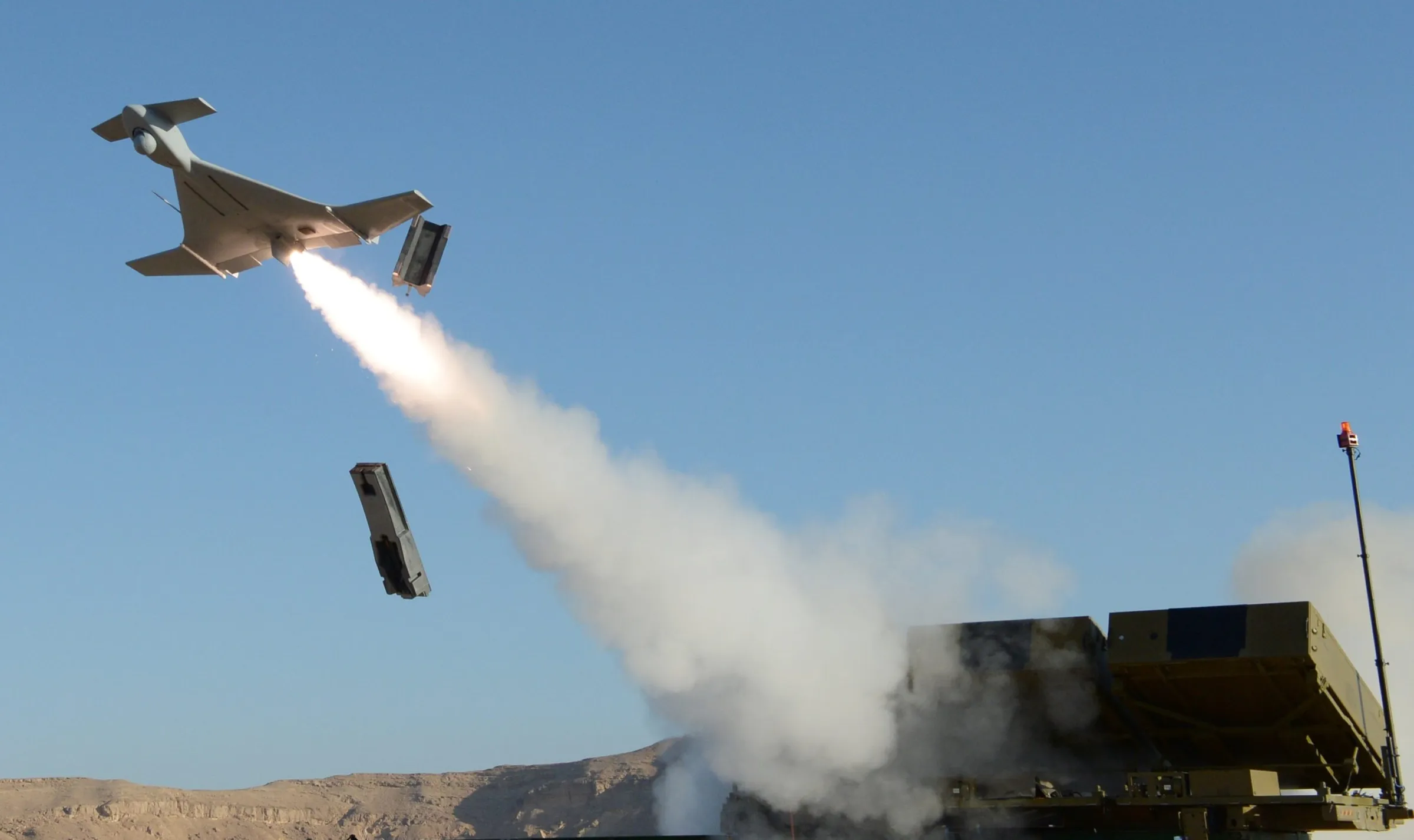
The war over Nagorno-Karabakh should be a wake-up call for European armed forces: combat drones were used there widely and successfully, attracting attention around the globe.
Until recently, it seemed as if military confrontations between the armies of different states were a thing of the past. Almost all conflicts of recent decades followed an asymmetric pattern: a (mostly) state actor or an alliance held air superiority and used it against irregular forces, militias, rebel groups or terrorist organisations such as Islamic State. The exceptions were the Caucasus conflict in 2008 and the fighting in Ukraine in 2014 – with an outcome that in the end only seemed to confirm the rule. Against this background, Azerbaijan’s recent offensive marks a genuine turning point: Baku set out to recapture the seven territories occupied by Armenia since 1994. What had not been achieved at the negotiating table for decades, its army accomplished on the battlefield in just 44 days.
A turning point in the conduct of operations
The conflict, which ended on 10 November 2020 with a Russian-brokered ceasefire, can also be seen as a turning point because of the way it was fought. Videos circulated on social media of destroyed tanks and radars, burning combat vehicles and soldiers frantically and hopelessly seeking cover. What the images did not show: behind these attacks and the destruction were hundreds of drones – armed or acting as munitions themselves. Their brutal effectiveness ultimately left the Armenian army little chance.

This was not due to a lack of courage among Yerevan’s soldiers, nor to poor training or equipment, and they did not have to make do with outdated materiel either. On the contrary, they repeatedly cut off and destroyed Azerbaijani units that had advanced too far. Something else was decisive: their way of warfare had already been overtaken by the technological developments of recent years, and it showed a major weakness at a key point. An air defence umbrella of ground-based air defence systems that were not networked with one another could not withstand the massive drone storm – it was overwhelmed astonishingly quickly. Baku then used its Turkish and Israeli drones not merely to monitor and individually eliminate Armenian positions and heavy weapons. Rather, it used them to shape and dominate the entire battlefield. This showed on a large scale what a deliberate, highly coordinated and networked approach looks like in reality: electronic warfare, reconnaissance and surveillance, and of course the employment and logistics of the weapon-carrying systems.
Combat drones’ tally: tanks, guns, air defence
The unmanned systems have a tiny radar signature, barely larger than that of a small bird. They alone – above all the Turkish twin-boom Bayraktar TB-2 and the Israeli “kamikaze drone” IAI-Harop – account for 85 T-72A/AV/B tanks, 30 other armoured fighting vehicles, 32 artillery pieces, 25 multiple rocket launchers and 25 surface-to-air missile and radar systems. The last group in particular deserves attention: the Harop even destroyed three 5P85S launchers of the Russian S-300 air defence system (NATO: SA-10), which is held in considerable respect in the West, as well as one 5N63 (Flap Lid) and two ST-6U/UM (Tin Shield) systems.
Twelve SA-8 (Osa) and one SA-15 Tor surface-to-air missile system were also hit. Their radar had evidently failed to detect the small, slow Harop, which emits hardly any heat, and could therefore not establish a fire control solution. In addition, Baku knew the locations and frequencies of Armenian air defence early on. They had been reconnoitred by old Antonov An-2 biplanes converted into remote-controlled “drones”. When several of these aircraft were shot down at the start of the war, their work had long been done.
Lessons for Europe’s air defence
From a European perspective, the massive and successful use of drones is also revealing. The approach could serve as a blueprint for future conflicts elsewhere – and most European armies would probably be overstretched and overwhelmed just as quickly as Armenia in a comparable drone scenario. This does not necessarily require billions for new ground-based air defence, as most of the Russian systems in Karabakh were by no means completely outdated. The problem lay in their outdated sensors and, above all, in the lack of integration into a networked, integrated air situation and air defence picture. Where this is in place, even classic anti-aircraft guns are suitable for countering drones – such as the 3.5 cm guns in service with the Austrian Armed Forces (Bundesheer), even with their Skyguard fire control.
This does, however, require upgrading Skyguard with an AESA sensor or a network with learning intelligence, as well as so-called “airburst” ammunition: time-fuzed fragmenting ammunition with a kinetic fragmentation effect.

Sigue leyendo

Munición merodeadora Virtus de Stark: la 45.ª Brigada Acorazada «Litauen» la prueba en «Freedom Shield 2026»

Estaciones de drones para vigilancia marítima: Rift inicia pruebas frente a la costa francesa

Drones navales para el Báltico: Suecia contrata a Saildrone la vigilancia como servicio

Drones navales: Eviden presenta SMX, un sensor electromagnético de navegación
